Annotator Burnout: Causes, Warning Signs, and Prevention
Annotator burnout has clear causes and warning signs. Learn the drivers, symptoms to watch for, and the workload and rotation practices that prevent it.

Annotator burnout is not a motivation problem or a character flaw. It is a predictable occupational response to how the work is designed: too much repetition, too much unresolved ambiguity, too much exposure to distressing material, and too much pressure to hit a number. The World Health Organization lists burn-out as an occupational phenomenon that results from “chronic workplace stress that has not been successfully managed” (WHO, 2019). Get the design wrong and even careful, committed people start to fray; get it right and the same people stay sharp.
This matters for anyone running an annotation, coding, or moderation team, because the damage is not only human. Burnout erodes exactly the faculties good labeling depends on: sustained attention, consistency, and the willingness to think hard about an edge case. This guide covers what annotator burnout is, what causes it, the warning signs to watch for, how it quietly degrades label quality, and the workload, rotation, and support practices that prevent it, grounded in primary research and handled with care where the subject is people’s mental health.
What is annotator burnout?
Annotator burnout is the state of chronic exhaustion, detachment, and diminished effectiveness that develops when someone spends long stretches labeling data under stress the job never lets up. It is the same syndrome the WHO recognizes as an occupational phenomenon, applied to annotation, coding, and content-moderation work (WHO, 2019). The construct is well defined and, importantly, not vague: it has three specific dimensions that were established in clinical measurement four decades ago.
The measurement model is the Maslach Burnout Inventory. Christina Maslach and Susan Jackson built a scale for human-services workers and found three subscales in the data: emotional exhaustion, depersonalization, and reduced personal accomplishment (Maslach & Jackson, 1981). The field’s standard review restates burnout as “a prolonged response to chronic emotional and interpersonal stressors on the job,” defined by the three dimensions of exhaustion, cynicism, and inefficacy (Maslach, Schaufeli & Leiter, 2001). The WHO’s ICD-11 definition mirrors that structure almost exactly.
| Dimension | What it is | How it shows up in annotation work |
|---|---|---|
| Emotional exhaustion | Feeling used up and depleted of emotional and physical resources (Maslach & Jackson, 1981) | Dread before a shift; nothing left after work; fatigue that a weekend does not fix |
| Depersonalization / cynicism | A negative, callous, or detached response to the work and its subjects (Maslach et al., 2001) | Going through the motions; numb or dismissive reactions to transcripts or images; 'just hit the target' |
| Reduced personal accomplishment / efficacy | A sense of ineffectiveness and lack of achievement (WHO, 2019; Maslach et al., 2001) | Feeling the work is pointless; quality slipping; lost confidence in one's own judgments |
Two things follow from this definition. First, burnout is not the same as a bad week; ordinary tiredness lifts after rest, while burnout persists because its cause sits in the work, not the worker. Second, because the WHO frames it as occupational, the levers that fix it are also occupational, which is good news for anyone with the authority to change how a project runs.
What causes annotator burnout?
Four drivers do most of the damage in annotation work: monotony, unresolved ambiguity, exposure to distressing content, and throughput or surveillance pressure. None of them is about individual resilience. They are properties of the task design, and each maps onto the chronic, unmanaged stress the WHO puts at the center of burnout (WHO, 2019).
Monotony and repetition. High-volume labeling asks a person to make the same fine-grained decision hundreds of times an hour with no variation. That sustained, low-reward vigilance is fatiguing on its own and feeds the exhaustion dimension directly. Repetition without rotation is one of the easiest drivers to fix and one of the most often ignored.
Unresolved ambiguity and decision fatigue. When the guidelines do not resolve a genuinely hard case, the annotator absorbs that uncertainty on every instance. Each ambiguous item becomes a small, unwinnable argument with the codebook, and the cumulative cost is real. This is why vague instructions are a wellbeing problem, not only a quality one; annotation guidelines that actually work remove a standing source of stress before it compounds.
Exposure to distressing content. At the severe end of the spectrum, the material itself harms the worker. A qualitative study of commercial content moderators found symptoms consistent with repeated trauma and framed them within post-traumatic and secondary traumatic stress (Spence et al., 2023), and a follow-up cross-sectional study found a dose-response relationship between how frequently moderators saw distressing content and their psychological distress and secondary trauma (Spence et al., 2024). Sarah Roberts’ ethnography describes a large moderation workforce carrying an emotional toll their employers were slow to acknowledge (Roberts, 2019).
Throughput pressure and surveillance. Aggressive quotas, pay tied to raw volume, and close monitoring turn a hard job into a relentless one. A 2026 mixed-methods study of moderators in Africa is pointed about this: it found that precarious working conditions, poor compensation, and toxic environments—not the content alone—drove severe distress, and that platform wellness programs were largely ineffective (Abdelkadir et al., 2026). The same precarity runs through the wider labeling supply chain; see the human cost of data labeling for how invisibility and low pay compound the strain.
What are the warning signs of annotator burnout?
The warning signs of annotator burnout track the three dimensions, so they are easiest to read when grouped that way rather than as a loose symptom checklist. A useful team-level heuristic: exhaustion shows up in energy and attendance, cynicism in tone and engagement, and reduced efficacy in the work itself (Maslach, Schaufeli & Leiter, 2001). Watch for clusters, not single bad days.
- Exhaustion signs: visible fatigue, dread before shifts, rising sick days, difficulty concentrating, and irritability that is out of character.
- Cynicism and detachment signs: flat or dismissive talk about the task, withdrawal from calibration discussions, “why does any of this matter” comments, and treating transcripts or images as objects rather than content that needs judgment.
- Reduced-efficacy signs: slipping accuracy, more rushed or copy-paste rationales, loss of confidence in decisions, and an annotator who used to raise edge cases going quiet.
None of these is proof of burnout on its own, and reading them as a private failing is exactly the wrong move. They are signals to look at the workload and the design, which is where the causes live.
How does annotator burnout degrade label quality?
Annotator burnout degrades label quality because its symptoms are, almost precisely, the opposite of what careful labeling requires. The third dimension of the syndrome is reduced professional efficacy—diminished accomplishment and productivity by definition (Maslach, Schaufeli & Leiter, 2001)—and its cynicism dimension describes active disengagement from the work. A rater who is exhausted and detached stops interrogating the hard cases, defaults to the fastest label, and writes thinner rationales.
There is also a workload signal worth taking seriously. Because frequency of exposure to distressing content scaled with distress in a dose-response pattern (Spence et al., 2024), heavier and unmanaged workloads plausibly cost the team twice: once in the worker’s wellbeing and again in the reliability of what they produce. You cannot cleanly separate “protect the annotator” from “protect the dataset”; they are usually the same intervention. That is the pragmatic case for prevention, on top of the ethical one.
How do you prevent annotator burnout?
You prevent annotator burnout by changing the work, not by exhorting people to cope. Because the causes are structural, the fixes are too, and the evidence is blunt that add-on wellness sessions do not substitute for them (Abdelkadir et al., 2026). Here is a prevention checklist that maps onto the drivers above.
- Cap daily volume and exposure. Set a ceiling on items per day and, for distressing material, on continuous exposure time, with mandatory breaks. The dose-response between exposure and distress (Spence et al., 2024) is the direct argument for hard caps rather than aspirational ones.
- Rotate tasks. Alternate between task types, and away from the heaviest content, so no one spends a full shift on the single most draining queue. Rotation attacks monotony and cumulative exposure at once.
- Set realistic quotas and decouple pay from raw throughput. Quotas that can only be met by rushing manufacture both bad data and burnout. Paying fairly is necessary but not sufficient, and how you structure it matters; see does pay improve annotation quality.
- Remove ambiguity before it accumulates. Resolve hard cases in the codebook, and run a pilot annotation round to surface the confusing ones early rather than leaving each annotator to absorb them one at a time.
- Provide genuine, not token, support. Trauma-informed care and accessible counseling are what the moderation literature recommends for exposure-heavy work (Spence et al., 2023; Steiger et al., 2021); nominal sessions that workers found unhelpful are the pattern to avoid (Abdelkadir et al., 2026).
- Restore meaning, feedback, and voice. Supportive colleagues and clear recognition of the work’s importance were associated with lower distress among moderators (Spence et al., 2024). Tell people what their labels are used for, and give them a real channel to push back on a broken category.
- Screen and prepare people for the work. Many moderators entered the job without being told what it involved (Abdelkadir et al., 2026). Honest previews and fit-focused hiring reduce later harm; see screening and training annotators.
A worked example: a shift that does not grind people down
The difference between a burnout machine and a sustainable workflow is usually a handful of specific design choices, not a bigger wellness budget. The table below contrasts a “grind mode” project with a “sustainable mode” one on the same task, as an illustrative synthesis of the practices above—not measured outcomes, but a concrete picture of what changes.
| Design choice | Grind mode (burns people out) | Sustainable mode |
|---|---|---|
| Daily volume | Open-ended; whatever hits the queue | Capped per person, with a hard stop |
| Task variety | Same label, all day | Rotated task types; heaviest queue time-boxed |
| Distressing-content exposure | Continuous, no limit | Time-boxed blocks, breaks, opt-outs, blur/greyscale tooling |
| Quota and pay | Pay per item; speed is everything | Realistic quota; pay not tied to raw throughput |
| Ambiguity | Annotator absorbs every hard case | Resolved in codebook; escalation path; piloted first |
| Support | A poster with a hotline number | Trauma-informed care and accessible counseling |
| Meaning and voice | Anonymous piecework, no feedback | Clear purpose, feedback, a channel to flag broken categories |
The point of laying it out this way is that every row is a decision a lab director or project lead already controls. You do not need to solve burnout as a mood; you need to change seven concrete rules about how the queue is fed and how people are paid, supported, and heard.
Where scale-guided measurement and expert annotation fit
The studies behind this guide share a discipline worth borrowing: they measure distress with validated instruments rather than a gut read. That is the same reason clinical work uses standardized scales at all. A clinician tracking depressive severity might use the ten-item, clinician-rated MADRS, which is designed to be sensitive to change, or a self-report screen like the PHQ-9; both exist so that “how are you doing” becomes a defensible, comparable measurement.
Two cautions matter here. These are instruments for trained use, not self-checks—do not repurpose a clinical rating scale as a do-it-yourself burnout test, and remember that burn-out is an occupational phenomenon distinct from clinical depression (WHO, 2019). And the annotation lesson is not “measure your annotators clinically.” It is that reliable measurement takes structure, whether you are rating a symptom or labeling a dataset.
Tagaroo’s own bet is on the last row of that table. It is a schema-first workspace where you define a coding scheme once with anchored definitions, an AI agent takes a first pass, and human reviewers correct and adjudicate it, with inter-rater reliability tracked as you go. The intent is to spend scarce human attention on judgment, where it is valuable, instead of on the repetitive throughput that grinds people down. That is a position with limits worth naming: a first-pass model does not remove the need for skilled reviewers, exposure-heavy review still needs the caps and support above, and no tool substitutes for fair pay and honest working conditions.
The practical upshot
Annotator burnout is caused by how the work is designed, follows a well-defined three-dimensional pattern, shows up in signs a manager can learn to read, and is prevented by structural change rather than token perks. The evidence points one way: exhaustion, cynicism, and reduced efficacy are the recognized dimensions (Maslach & Jackson, 1981; WHO, 2019); the toll is severe for exposure-heavy work (Abdelkadir et al., 2026; Roberts, 2019); and wellness sessions alone do not fix it (Abdelkadir et al., 2026).
If you change one thing, change the workload before the worker: cap volume and exposure, rotate tasks, set humane quotas, and resolve ambiguity in the codebook. Then turn your scheme into a guided, reviewable workflow where the human effort goes to judgment, and the grinding parts are the machine’s job—not a person’s.
References
- World Health Organization. Burn-out an “occupational phenomenon”: International Classification of Diseases. May 28, 2019. who.int/news/item/28-05-2019-burn-out-an-occupational-phenomenon
- Maslach C, Jackson SE. The measurement of experienced burnout. Journal of Occupational Behaviour. 1981;2(2):99-113. doi:10.1002/job.4030020205
- Maslach C, Schaufeli WB, Leiter MP. Job Burnout. Annual Review of Psychology. 2001;52:397-422. doi:10.1146/annurev.psych.52.1.397
- Roberts ST. Behind the Screen: Content Moderation in the Shadows of Social Media. Yale University Press; 2019. doi:10.12987/9780300245318
- Steiger M, Bharucha TJ, Venkatagiri S, Riedl MJ, Lease M. The Psychological Well-Being of Content Moderators. Proceedings of the 2021 CHI Conference on Human Factors in Computing Systems (CHI ’21). 2021. doi:10.1145/3411764.3445092
- Spence R, Bifulco A, Bradbury P, Martellozzo E, DeMarco J. The psychological impacts of content moderation on content moderators: A qualitative study. Cyberpsychology: Journal of Psychosocial Research on Cyberspace. 2023;17(4):Article 8. doi:10.5817/CP2023-4-8
- Spence R, Bifulco A, Bradbury P, Martellozzo E, DeMarco J. Content Moderator Mental Health, Secondary Trauma, and Well-being: A Cross-Sectional Study. Cyberpsychology, Behavior, and Social Networking. 2024. doi:10.1089/cyber.2023.0298
- Abdelkadir NA, Yang T, Kapania S, et al. Beyond Content Exposure: Systemic Factors Driving Moderators’ Mental Health Crisis in Africa. Proceedings of the ACM on Human-Computer Interaction (CHI ’26). 2026. doi:10.1145/3772318.3791639
Frequently asked questions
- Is annotator burnout the same as being tired?
- No. Burnout is a chronic occupational syndrome, not a bad week. The World Health Organization defines burn-out as a syndrome resulting from chronic workplace stress that has not been successfully managed, with three dimensions: exhaustion, mental distance or cynicism about the job, and reduced professional efficacy (WHO, 2019). Ordinary tiredness lifts after rest; burnout persists because its cause is how the work is designed, not a single hard day.
- What are the three dimensions of burnout?
- The recognized model has three dimensions: emotional exhaustion (feeling used up and depleted), depersonalization or cynicism (detachment and negativism toward the work), and reduced personal accomplishment or efficacy (a sense of ineffectiveness). These were established as the three subscales of the Maslach Burnout Inventory (Maslach & Jackson, 1981) and restated as exhaustion, cynicism, and inefficacy in the field's standard review (Maslach, Schaufeli & Leiter, 2001); the WHO's ICD-11 definition mirrors them (WHO, 2019).
- Do wellness programs prevent annotator burnout?
- Not on their own. A 2026 survey and interview study of content moderators in Africa found that the corporate wellness programs platforms promoted were largely ineffective and inadequate, and that systemic labor conditions drove distress more than any single stressor (Abdelkadir et al., 2026). What does appear to help is structural: supportive colleagues and genuine recognition of the work's importance were associated with lower distress in a cross-sectional study of moderators (Spence et al., 2024).
- How does burnout affect annotation quality?
- Burnout attacks the exact faculties labeling depends on. Its third dimension is reduced professional efficacy, meaning diminished accomplishment and productivity by definition (Maslach, Schaufeli & Leiter, 2001), and its cynicism dimension describes disengagement from the work. In content moderation, frequency of exposure to distressing content showed a dose-response relationship with psychological distress and secondary trauma (Spence et al., 2024), so heavier, unmanaged workloads plausibly cost both the worker and the data.
- Which annotation tasks carry the highest burnout risk?
- Reviewing distressing or harmful content is the best-documented and most severe case. Ethnographic and survey work describes content moderators carrying an emotional toll their employers were slow to acknowledge (Roberts, 2019), with a 2026 study reporting that 55% of surveyed African moderators had moderate-to-severe or severe psychological distress (Abdelkadir et al., 2026). Any annotation that combines high volume, unresolved ambiguity, and throughput pressure raises risk, even without disturbing material.
Keep reading
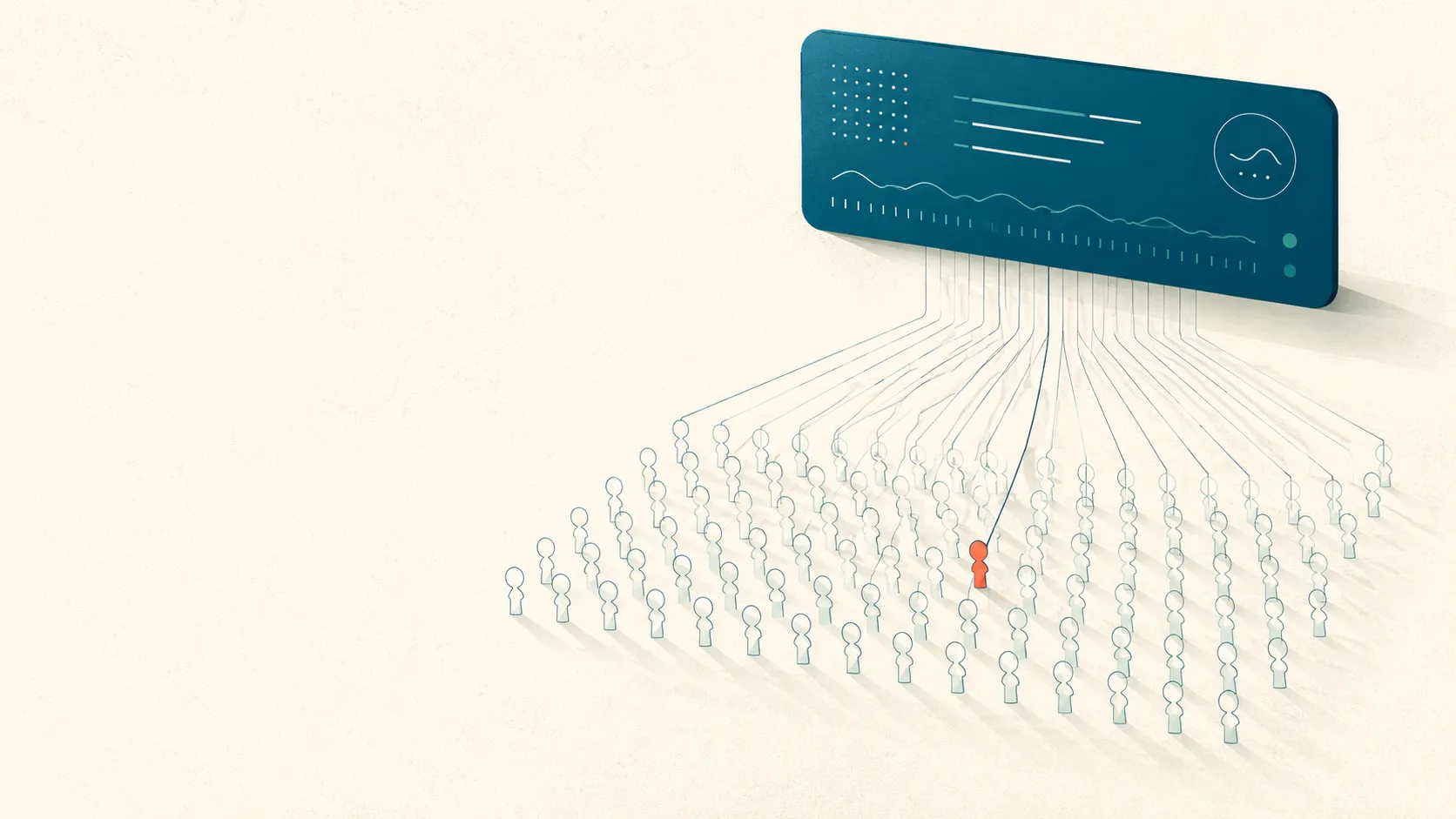 Annotation Operations & Ethics
The Human Cost of Data Labeling: Ghost Work Behind AI
The human cost of data labeling: the underpaid, invisible ghost workers behind AI, the toll of the work, and what responsible sourcing looks like.
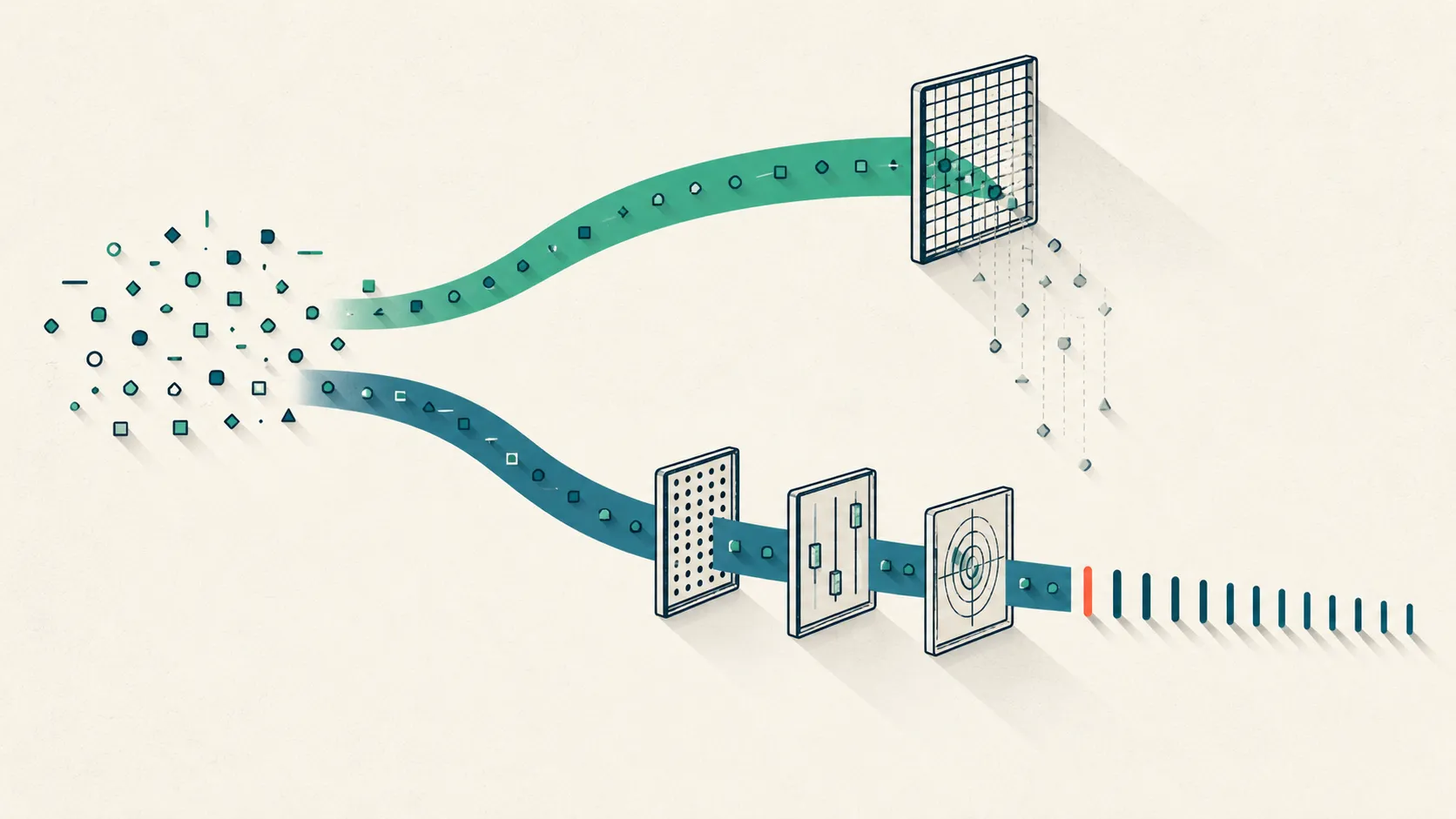 Annotation Operations & Ethics
Improve Annotator Quality: Screen and Train, Don't Filter
To improve annotator quality, screen candidates for aptitude and train them before coding—filtering bad labels later loses. See the evidence.
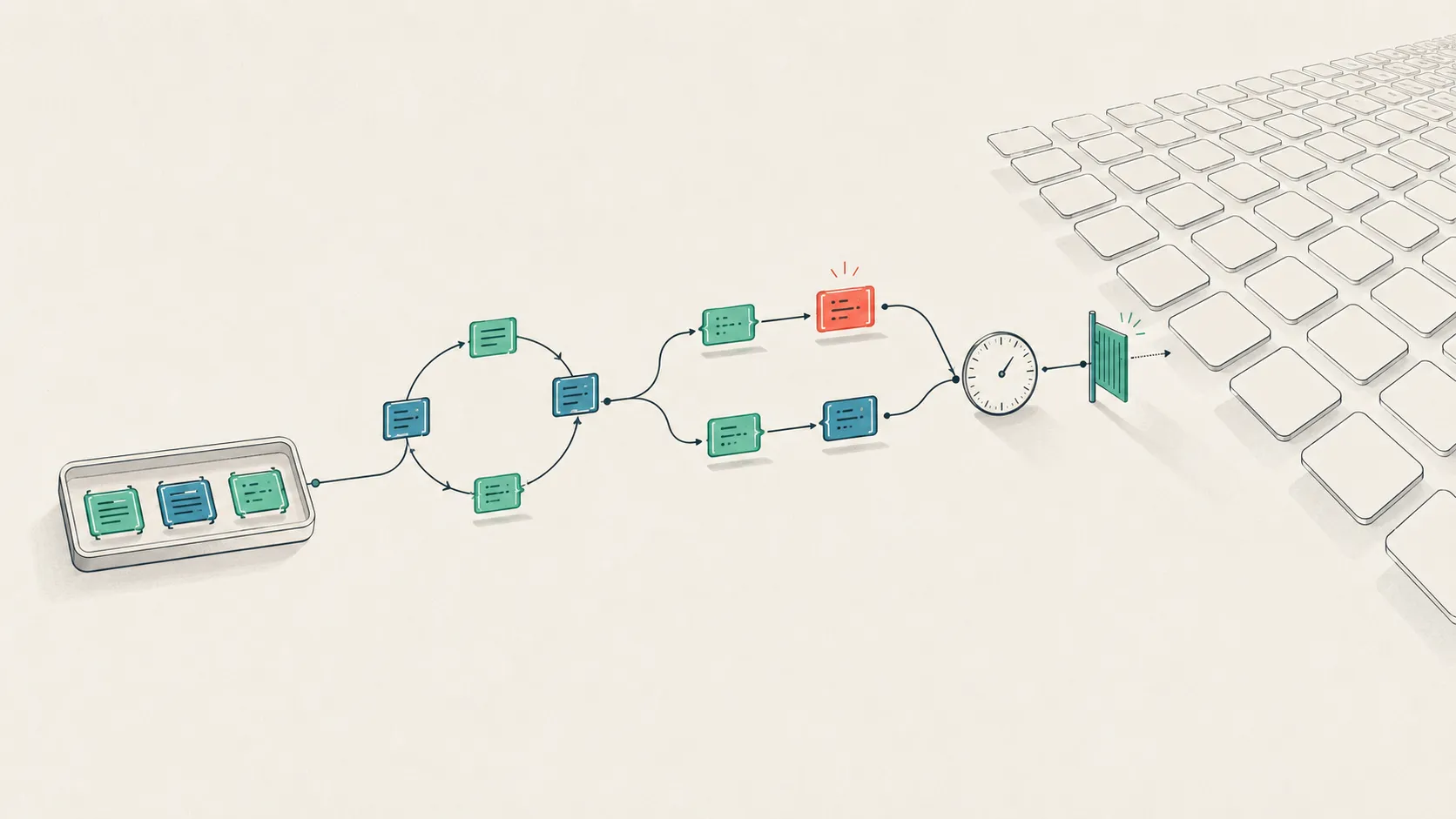 Methods & Frameworks
How to Run a Pilot Annotation Round Before You Scale
Run a pilot annotation round before you scale: scope, sample size, double-coding, measuring agreement, and revising the codebook. See the checklist.
Put this into practice
Tagaroo turns any rating scale or coding scheme into a guided annotation workflow—with inter-rater reliability computed as you go.