Gold Questions & Honeypots: Annotation QA That Works
Gold questions, honeypots, and attention checks catch bad annotations—if thresholds spare legitimate disagreement. See how each QA method works.
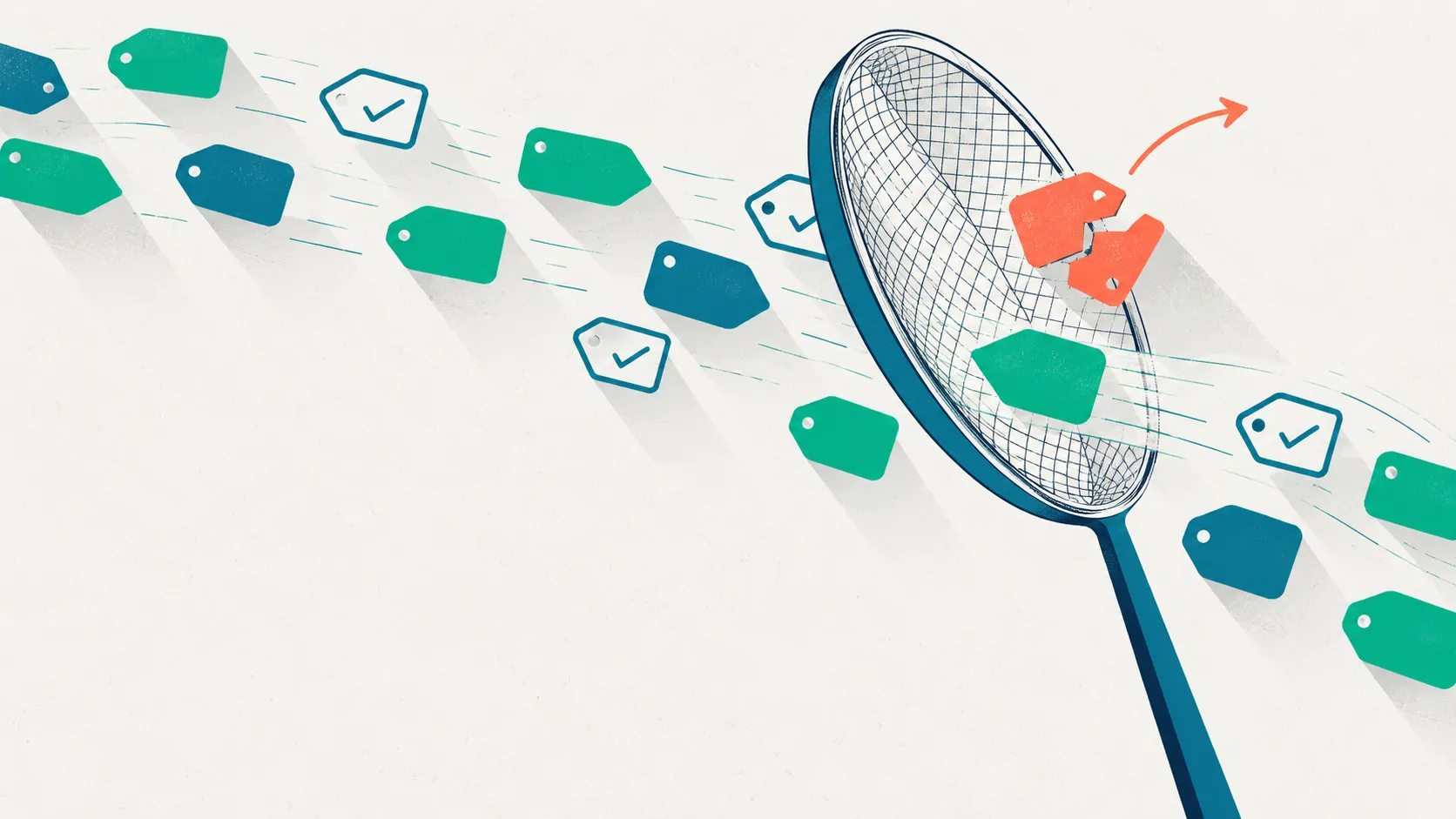
About a quarter of the annotations in a rushed labeling pass can be wrong, gamed, or careless—and unless you planted something with a known answer, you have no way to tell which quarter. Gold questions are that something. They are tasks with an answer you already know, mixed into real work so you can measure who is reliable without hand-checking every label (Oleson et al., 2011).
This is a practical guide to the QA toolkit built around that idea: gold questions and check items, honeypots, qualification and screening tests, attention checks, and agreement-based filtering. It covers what each one catches, where each one goes blind, and the harder problem underneath all of them—how to set thresholds that catch bad work without punishing an annotator who simply disagrees for good reasons.
What are gold questions, honeypots, and qualification tests?
Gold questions, honeypots, and qualification tests are three ways to slip an item with a known answer into an annotation job so you can measure quality without checking every label by hand. They differ in when the item appears and whether the annotator knows it is a test.
A gold question (or check item) is embedded in the normal flow of work and scored silently. A honeypot is a gold item deliberately disguised to catch someone who is gaming the task. A qualification test is a gate: a batch of known-answer items an annotator must pass before touching real data.
Attention checks are a close cousin aimed at a narrower failure. An attention check verifies that a person is reading the instructions at all—the classic form is an instructional-manipulation item that tells you to answer in a specific, unusual way. Kittur, Chi, and Suh showed the value of these verifiable questions early: adding items with a known answer, and signaling that responses would be scrutinized, sharply cut the rate of invalid and gamed submissions in a crowd task (Kittur, Chi & Suh, 2008).
The distinction that matters is what each mechanism is actually testing. Gold and honeypots test whether the label is right. Qualification tests screen the person before they start. Attention checks test whether they are engaged.
A workflow that leans on only one of these is blind to the failures the others were built to catch, which is the whole reason to reason about the set together.
Which QA mechanism catches what?
No single mechanism catches everything, so the right question is not “which is best” but “what does each catch and miss.” The table below maps the toolkit against the two things you actually care about: the bad work it surfaces, and the blind spot it leaves. Read the last column as the reason to combine mechanisms rather than trust one.
| Mechanism | What it is | What it catches | What it misses | Main failure mode |
|---|---|---|---|---|
| Gold / check items | Known-answer items scored silently inside real work | Careless, low-skill, and random labeling over time | Errors on genuinely ambiguous items with no single right answer | Only tests cases that have one defensible answer |
| Honeypots | Gold disguised as normal work to trap deliberate cheaters | Bots and scripted or copy-paste gaming | 'Smart deceivers' who do just enough to look human | Gameable once workers fingerprint the traps |
| Qualification tests | A pass/fail gate before real work begins | Under-qualified annotators at intake | Skill drift and fatigue after the gate is passed | One-time snapshot; says nothing about later work |
| Attention checks | Instructional items that confirm the person is reading | Inattentive, rushing, or auto-piloting annotators | Attentive people who are simply wrong or biased | A single check is unreliable; culling failers biases the sample |
| Agreement filtering | Flag annotators who diverge from the consensus label | Consistent outliers and off-task workers | Shared misconceptions; punishes correct minority views | Treats legitimate disagreement as error |
| Time-on-task | Flag submissions that are implausibly fast or slow | Speed-runners clicking through | Fast experts and slow careful readers alike | A proxy, never a verdict; noisy on its own |
Notice how the blind spots cluster around one theme: the boundary case. Gold, honeypots, and time-on-task all go quiet exactly where an item has no single defensible answer, and agreement filtering actively misfires there by scoring a thoughtful minority as noise. That shared weakness is the hinge of this whole topic, and the section on thresholds returns to it.
How do gold questions actually work?
Gold questions work by turning a handful of known answers into an estimate of quality for every annotator, so you spend expert review where it pays off instead of re-checking everything. In the crowdsourcing model that popularized them, each worker’s running accuracy on embedded gold becomes a trust score that gates their labels, triggers retraining, or removes them (Oleson et al., 2011). The same logic scales down to a three-person clinical coding team: a few audited items per coder tell you who needs a calibration conversation.
The refinement that made gold practical at scale was programmatic gold. Rather than hand-authoring a large gold set, Oleson and colleagues at CrowdFlower generated check items automatically from known error patterns, used them to deliver targeted training feedback the moment a worker slipped, and caught common scams—all while cutting the manual effort of managing the labor and improving overall quality (Oleson et al., 2011). Gold stopped being a static answer key and became a feedback loop.
How you choose gold turns out to matter as much as how much you have. Le and colleagues found that sampling gold from the natural distribution of the data was inferior to sampling it to cover the space of likely worker errors—in effect, over-representing the hard, error-prone cases that actually separate a careful annotator from a careless one (Le et al., 2010). Easy gold that everyone passes measures nothing. This is the same instinct behind a good pilot annotation round: find the items that break people, then test on those.
There is a deeper use of gold than pass/fail. Ipeirotis, Provost, and Wang used gold labels not just to score workers but to model them—separating a worker’s recoverable bias (a consistent, predictable slant you can correct for) from unrecoverable error (random noise you cannot). A worker who systematically confuses two categories in a fixable way is still informative once you account for the bias; a random responder is not (Ipeirotis, Provost & Wang, 2010). That distinction is what keeps a good QA system from throwing away useful, opinionated annotators—more on it below.
What is the difference between a honeypot and a gold question?
A honeypot is a gold question that has been disguised to catch someone actively trying to cheat, while an ordinary gold question just needs to be indistinguishable from real work. The concealment is the point. If a cheater can tell which items are being scored, they can pass those and slack on the rest, so a honeypot hides in plain sight and waits.
The trouble is that not all bad actors behave the same way. Gadiraju and colleagues built a taxonomy of untrustworthy crowd workers and found distinct types—from the obviously ineligible and the fast, rule-breaking “deceivers” to “smart deceivers” who invest just enough effort to look legitimate while contributing little of value (Gadiraju et al., 2015). Simple honeypots reliably catch the crude cheaters. The smart deceiver is the one who reads well enough to spot your trap and step around it.
That is why honeypots are a layer, not a solution. They raise the cost of low-effort gaming, which thins out the easy cases and lets scarce human review focus on the ambiguous middle. Pair them with the label-level checks in how to find label errors in your dataset, because a honeypot tells you who to distrust while confident-learning and disagreement signals tell you which labels to re-examine.
Do attention checks and qualification tests improve quality?
Attention checks and qualification tests improve quality when they are treated as noisy signals rather than verdicts—and quietly damage your data when they are not. Qualification tests genuinely help at intake: screening before work begins keeps under-qualified annotators out of the pipeline entirely, which is cheaper than filtering their output later. But a gate is a one-time snapshot. It says nothing about the fatigue, drift, or corner-cutting that shows up in hour six, which is why screening pairs best with ongoing gold rather than replacing it.
Attention checks are more fragile than they look. Berinsky, Margolis, and Sances ran the definitive study on survey screeners and reached three uncomfortable conclusions: as many as half of respondents can fail attention items, a single screener is unreliable because passing it once does not predict passing it again, and screener passage correlates with real characteristics like education—so dropping everyone who fails one item skews your sample in a nonrandom way (Berinsky, Margolis & Sances, 2014). Their recommendation was to use multiple checks of varying difficulty and to report results conditional on attention level, not to silently cull failers.
For annotation, that translates into a rule: never let one failed check auto-disqualify a person or their labels. Screening for aptitude and training annotators up front pays off more than any single filter—the case laid out in screening and training annotators—and it does so without the selection bias a trigger-happy attention gate introduces. If you are also deciding how many independent reads each item needs, how many annotators per item is the companion question, because redundancy and gold do different jobs.
How do you set thresholds without punishing legitimate disagreement?
Set thresholds on items that have one defensible answer, and route everything else to adjudication—because the failure that quietly ruins subjective annotation is mistaking a reasoned minority view for bad work. Gold is trustworthy exactly where an answer is objectively knowable. The moment you apply a “you disagreed with consensus, so you fail” rule to a genuinely ambiguous item, you are no longer measuring quality; you are penalizing the annotator who noticed the ambiguity.
The recoverable-versus-unrecoverable distinction is the practical lever. An annotator who is consistently, predictably slanted can be corrected and kept, while a random responder cannot (Ipeirotis, Provost & Wang, 2010). So thresholds should trigger on randomness relative to a known answer, not on distance from the majority.
A coder who dissents in a stable, explainable pattern is a candidate for a calibration conversation, not a ban. Disagreement handled this way is a resource, an argument made at length in why disagreement is signal, not noise.
Three design choices keep thresholds fair. First, use gold only on items with a defensible ground truth, and send boundary cases to a documented adjudication decision instead of scoring them. Second, require a pattern—several missed gold items over time, not one—before you act, following the multiple-item logic Berinsky and colleagues recommend for screeners (Berinsky, Margolis & Sances, 2014).
Third, make the ground truth itself defensible: if annotators keep “failing” the same gold item, the annotation guidelines or the gold answer may be wrong, not the people. Cutting pay or access on a shaky threshold also has second-order effects on the people doing the work, which ties into whether pay improves annotation quality in the first place.
A worked example: catching a spammer without dropping a careful coder
Here is a synthetic illustration—invented spans, round numbers, no real transcript data—of gold doing its job and not overreaching. Suppose three annotators code 200 speech spans for formal thought disorder using the TLC scale for thought, language and communication, which gives each item an operational definition with verbatim examples (Andreasen, 1986), and tag depressive content with the MADRS depression scale, a ten-item clinician-rated measure designed to be sensitive to change (Montgomery & Åsberg, 1979).
You seed 20 blind gold items among the 200. Ten have an unambiguous answer (clear Poverty of Speech, clear absence of thought disorder). Ten are deliberately hard boundary cases—the kind Le and colleagues argue gold should over-represent (Le et al., 2010)—where Derailment and Tangentiality genuinely blur.
Coder A passes 3 of 10 unambiguous gold items and shows no stable pattern—misses scatter randomly across easy and hard alike.
Coder B passes 10 of 10 unambiguous items but disagrees with the reference on 6 of the 10 boundary items, and always in the same direction: they read mid-thought drift as Derailment where the key called it Tangentiality.
Coder A is the case gold was built for. Random failure on items with a known answer is unrecoverable noise, and the threshold should flag them for review (Ipeirotis, Provost & Wang, 2010).
Coder B is the trap. They are perfect on objective gold and merely hold a consistent, explainable position on a real boundary. A naive “6 disagreements = fail” rule would discard your most careful reader; the recoverable-bias view keeps them and books a five-minute calibration on the Derailment–Tangentiality line instead.
The lesson from the toy numbers is the one that generalizes: score annotators on the gold that has a right answer, and treat disagreement on the gold that does not as information about the item, not a verdict on the person.
Where gold questions and honeypots fail
Gold questions and honeypots fail in three predictable ways, and planning around them is what separates a QA system that improves data from one that scrambles it. Knowing the failure modes is the price of using the tools well.
The first is gaming. Checco, Bates, and Demartini showed that gold is attackable: colluding workers can build an inferential system to detect which items are likely gold and answer only those correctly, sailing through the checks while doing poor work everywhere else (Checco, Bates & Demartini, 2018). The defense is to keep gold blind, refresh it often, and draw it from the hard cases so it cannot be memorized as a fixed, guessable set.
The second is over-filtering. Every threshold trades false positives against false negatives, and a strict one that removes suspect annotators will also remove good, opinionated ones. This is sharpest on subjective and clinical coding, where “correcting” a legitimate boundary call toward the majority manufactures false certainty—the same failure that shows up when you find label errors in your dataset and mistake ambiguity for error.
The third is easy gold. Gold that everyone passes measures nothing and lulls you into false confidence; if your check items are all softballs, a high pass rate tells you your gold is weak, not that your data is clean (Le et al., 2010). Good gold, like a good pilot round, lives on the items that actually break people.
Where Tagaroo fits
Tagaroo is a schema-first annotation workspace with review and adjudication built into the flow: you define a coding scheme once, embed check items, capture independent reads, watch inter-rater reliability, and route disagreements to an adjudicator who records a decision and a rationale. That last step is where the argument of this post lives—gold catches the random and the careless, while genuine boundary disagreement goes to a documented human call rather than an automatic strike. An AI first pass can rank suspect labels for review, but it is a triage aid a qualified human signs off on, never a finished label and never a diagnosis.
On data handling, Tagaroo takes a de-identify-first path: its terms require you to strip direct identifiers before upload, its anonymous trial mode runs in the browser so trial text never leaves your machine, and the stack is EU-hosted and GDPR-oriented. It is not a medical device. If your workflow must process raw identifiable data in the cloud, put that question to any vendor—including this one—before uploading; see the privacy policy for specifics.
The practical upshot
Gold questions are the backbone of annotation QA because they turn a few known answers into a quality estimate for everyone, but their power ends exactly where a defensible answer does. Layer the mechanisms so their blind spots stop overlapping: gold and honeypots for the random and the cheating, qualification tests at intake, attention checks as a noisy signal read across multiple items, and adjudication for the boundary cases none of them can settle.
If you change one thing, change this: threshold on the gold that has a right answer, and never let a single failed check—or a stack of reasoned disagreements—auto-disqualify a careful annotator. Then build your coding scheme in Tagaroo with check items, reliability, and adjudication in one loop, so QA is part of labeling instead of a punishment bolted on after it.
References
- Oleson D, Sorokin A, Laughlin G, Hester V, Le J, Biewald L. Programmatic Gold: Targeted and Scalable Quality Assurance in Crowdsourcing. Human Computation: Papers from the 2011 AAAI Workshop (WS-11-11). 2011. aaai.org
- Ipeirotis PG, Provost F, Wang J. Quality Management on Amazon Mechanical Turk. Proceedings of the ACM SIGKDD Workshop on Human Computation (HCOMP ’10). 2010:64-67. doi:10.1145/1837885.1837906
- Kittur A, Chi EH, Suh B. Crowdsourcing User Studies with Mechanical Turk. Proceedings of the SIGCHI Conference on Human Factors in Computing Systems (CHI ’08). 2008:453-456. doi:10.1145/1357054.1357127
- Le J, Edmonds A, Hester V, Biewald L. Ensuring Quality in Crowdsourced Search Relevance Evaluation: The Effects of Training Question Distribution. SIGIR 2010 Workshop on Crowdsourcing for Search Evaluation (CSE). 2010. Semantic Scholar
- Checco A, Bates J, Demartini G. All That Glitters Is Gold—An Attack Scheme on Gold Questions in Crowdsourcing. Proceedings of the AAAI Conference on Human Computation and Crowdsourcing (HCOMP). 2018;6(1):2-11. doi:10.1609/hcomp.v6i1.13332
- Gadiraju U, Kawase R, Dietze S, Demartini G. Understanding Malicious Behavior in Crowdsourcing Platforms: The Case of Online Surveys. Proceedings of the CHI Conference on Human Factors in Computing Systems (CHI ’15). 2015. doi:10.1145/2702123.2702443
- Berinsky AJ, Margolis MF, Sances MW. Separating the Shirkers from the Workers? Making Sure Respondents Pay Attention on Self-Administered Surveys. American Journal of Political Science. 2014;58(3):739-753. doi:10.1111/ajps.12081
- Andreasen NC. The Scale for the Assessment of Thought, Language, and Communication (TLC). Schizophrenia Bulletin. 1986;12(3):473-482. doi:10.1093/schbul/12.3.473
- Montgomery SA, Åsberg M. A New Depression Scale Designed to Be Sensitive to Change. British Journal of Psychiatry. 1979;134:382-389. doi:10.1192/bjp.134.4.382
Frequently asked questions
- What is a gold question in annotation QA?
- A gold question—also called a check item or gold-standard item—is a task with a known correct answer that you mix into real work to measure whether an annotator is reliable. If someone misses the gold, that is a signal to retrain, reweight, or review their labels (Oleson et al., 2011). The idea predates crowdsourcing but scaled with it, because gold lets you estimate quality without hand-checking every submission.
- What is the difference between a gold question and a honeypot?
- A gold question is usually disclosed as a quality item or is at least indistinguishable from real work, while a honeypot is a hidden trap deliberately disguised as a normal task to catch someone gaming the system. Both use a known answer; the difference is intent and concealment. Honeypots target deliberate cheaters, but the smartest deceivers still slip past naive traps (Gadiraju et al., 2015).
- Do attention checks improve annotation quality?
- They can, but a single attention check is weak evidence: passing one check does not predict passing another, and screener passage correlates with traits like education, so dropping everyone who fails one item introduces selection bias (Berinsky, Margolis & Sances, 2014). Using several checks of varying difficulty, and reporting results by attention level rather than silently culling failers, is the safer design.
- Can gold questions be gamed?
- Yes. Colluding workers can build an inferential system to detect which items are likely gold and answer only those correctly while doing poor work on the rest (Checco, Bates & Demartini, 2018). This is why gold should be blind, refreshed, and drawn from the hard cases—not a fixed, guessable set of easy items.
- How do you set QA thresholds without punishing legitimate disagreement?
- Separate recoverable bias from unrecoverable noise. An annotator who is consistently, predictably 'wrong' relative to consensus is often informative and can be corrected, whereas a random responder cannot (Ipeirotis, Provost & Wang, 2010). Set thresholds on gold that has one defensible answer, and route boundary-case disagreement to adjudication instead of treating it as a failed check.
Keep reading
 Annotation Operations & Ethics
Annotator Disagreement Is Signal, Not Noise to Discard
Forcing one gold label can throw away real information. See why annotator disagreement is signal, not noise, and when to reconcile versus preserve it.
 Annotation Operations & Ethics
How to Find Label Errors in Dataset Quality Audits
Label errors hide in almost every dataset. Learn how to find label errors in dataset audits with disagreement, model confidence, and confident learning.
 Annotation Operations & Ethics
Does Pay Improve Annotation Quality? What Research Shows
Does pay improve annotation quality? Higher pay lifts speed, participation, and fairness—but rarely accuracy. See what really drives label quality.
Put this into practice
Tagaroo turns any rating scale or coding scheme into a guided annotation workflow—with inter-rater reliability computed as you go.