Change Talk vs Sustain Talk: Coding Client Language
Change talk vs sustain talk, coded: how the MISC classifies client language, why the balance predicts outcomes, and how to segment it reliably.
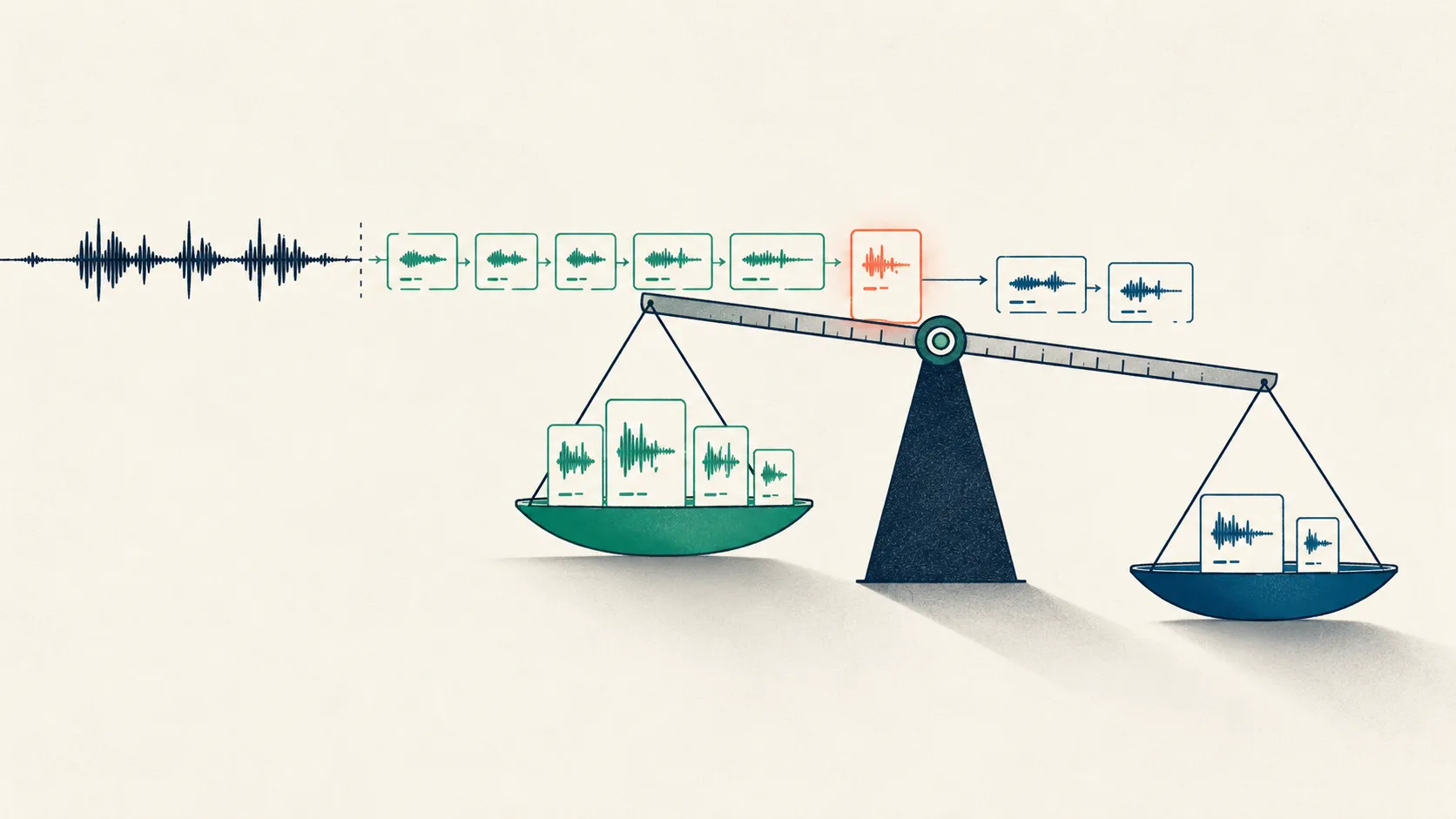
Two clients, same target behavior, same forty-minute session. One keeps circling back to versions of “I could probably cut back if I actually tried”; the other keeps landing on “a couple of drinks is the only way I switch off.” Change talk vs sustain talk is the distinction that separates those two utterances, and in motivational interviewing research it’s treated as the observable signal of which way a client is leaning inside the room. The MISC—the Motivational Interviewing Skill Code—is the instrument that turns that clinical intuition into coded data, classifying each client utterance as change talk, sustain talk, or follow/neutral relative to one specific goal (Miller, Moyers, Ernst & Amrhein, 2008).
What is change talk vs sustain talk?
Change talk is any client utterance that favors movement toward a target behavior change; sustain talk is any utterance that favors the status quo or argues against the change; follow/neutral is everything that does neither (Miller, Moyers, Ernst & Amrhein, 2008). The MISC assigns every client utterance to exactly one of those three categories, and it does so against a single, named target—reducing drinking, taking a medication, attending appointments. Change the target and the same sentence can flip categories.
That target-relative rule is the part newcomers skip. “I’ve been going out more with friends” is change talk if the goal is reducing social isolation and arguably sustain talk if the goal is cutting back on alcohol. The utterance carries no motivational direction on its own; the coder supplies the direction by holding the target fixed. This is why a MISC coding pass is meaningless until someone writes the target behavior at the top of the sheet.
| Category | What it is | Synthetic example (target: reduce drinking) |
|---|---|---|
| Change Talk (CT) | Language favoring the change—desire, ability, reasons, need, commitment, or steps taken | “I've started leaving my card at home so I can't buy any.” |
| Sustain Talk (ST) | Language favoring the status quo or arguing against the change | “A couple of beers is the only way I switch off after work.” |
| Follow / Neutral (FN) | Neutral with respect to the change—answering, asking, or off-target talk | “I usually get home from work around six.” |
The most common misread is treating a session full of both change and sustain talk as a coding failure. It isn’t. Ambivalence—wanting and not-wanting the change at once—is the normal state MI is built to work with, so a real transcript mixes all three categories, often inside a single client turn. The coder’s job isn’t to decide who the client “really” is; it’s to tag each utterance faithfully so the mix itself becomes measurable.
Does change talk predict behavior change?
In aggregate, yes—but with a qualifier that changes how you should code it: the balance of change to sustain talk, and the strength of the language, predict outcomes, not the raw number of change-talk statements. Across MI process research, more change talk relative to sustain talk tracks better behavioral outcomes, and more sustain talk tracks the status quo (Magill et al., 2018). That is the evidence behind the tidy one-liner “change talk predicts change; sustain talk predicts the status quo”—true as a tendency, misleading if you read it as “count the change talk.”
The clearest early demonstration came from Amrhein and colleagues, who coded 84 clients’ language during MI and separated the frequency of change-related utterances from their strength. Frequency did not predict behavioral outcome. The strength of commitment language late in the session did, above and beyond baseline drug use, and commitment strength turned out to be the pathway through which desire, ability, need, and reasons exerted their effect (Amrhein et al., 2003). Counting statements misses the signal; grading their strength catches it.
A later meta-analysis of change and sustain talk subtypes (13 studies, 1,556 participants) sharpened the same point: aggregate measures of change and sustain talk “are comprised of statement subtypes that are not equally meaningful in predicting outcome” (Magill et al., 2019). In other words, lumping every pro-change utterance into one “change talk” bucket throws away the distinctions that carry the prediction. If your research question is about mechanism, that’s an argument for coding the subtypes, not just the three top-level categories.
What are the change talk subtypes (DARN-CAT)?
Change talk subdivides into two families. Preparatory change talk—Desire, Ability, Reasons, Need, abbreviated DARN—signals a client weighing the change but not yet moving; mobilizing change talk—Commitment, Activation, Taking steps, abbreviated CAT—signals movement into action (Miller & Rollnick, 2013). “I want to cut back” is desire; “I’ve stopped buying beer” is a taking-steps statement, and the second sits closer to actual change than the first.
Sustain talk mirrors the same structure in the opposite direction—desire, ability, reasons, and need to keep things as they are—so a full subtype pass roughly doubles the label set. The MISC 2.x grades these subtypes by strength rather than treating each as present-or-absent, which is where much of its coding cost lives (Miller, Moyers, Ernst & Amrhein, 2008). That granularity is what let Amrhein’s team detect a rising commitment-strength trajectory in clients who later changed and a flat or falling one in those who didn’t (Amrhein et al., 2003). It’s powerful, and it’s the opposite of cheap.
How do you code change talk vs sustain talk?
Coding change talk vs sustain talk is a two-step job: first segment the client’s speech into utterances (unitizing), then classify each unit as change, sustain, or follow/neutral against the stated target (Miller, Moyers, Ernst & Amrhein, 2008). Both steps are decisions a second coder has to reproduce, which is what makes the coding auditable enough to compute agreement on. Skip the unitizing discipline and two coders can produce the same category totals from different utterances—agreement that’s real at the session level and illusory underneath.
Consider a short synthetic exchange, with the target behavior set to reducing drinking:
Client: I know the drinking’s gotten out of hand, and I’ve started leaving my card at home so I can’t buy any. [Change Talk—taking steps]
Clinician: So you’ve already put something concrete in place, not just thought about it.
Client: But a couple of beers is still the only way I switch off after work. [Sustain Talk—reasons]
Client: I don’t know. Maybe I could manage just weekends? [Change Talk—ability, weak strength]
Three things are worth noticing. The clinician’s reflection is deliberately left uncoded here—that turn belongs to the clinician side of the MISC and to the MITI behavior counts, not to the client-language tally. The first client turn is a single taking-steps unit even though it runs two clauses, because both clauses serve one change-favoring point.
The last turn is change talk too, but weak and hedged—exactly the kind of strength distinction a subtype-graded pass is meant to capture and a three-bucket pass throws away. Building those decisions into a written scheme is the work described in turning a scale into a codebook.
Why is utterance-level coding so hard?
Because two error sources compound: coders must agree on where the utterance boundaries fall and on how each unit is labeled, and the second is genuinely unreliable for fine distinctions. When Lord and colleagues re-examined MISC reliability, they found coders could agree roughly on how much change talk a session contained while disagreeing badly on which specific utterances earned the code—change and sustain talk subtypes failed to reach good-to-excellent agreement (Lord et al., 2015). The trouble is that fine-grained mechanism analysis is precisely what needs the utterance-level codes.
The practical response is to fix the unit before you argue about the label, and to budget generous double-coding for client language specifically. A codebook that names strength anchors and boundary rules—not just category definitions—is what moves utterance-level agreement off the floor. When you do report reliability, choose a coefficient that accounts for the unitizing step rather than just the labels; Krippendorff’s alpha for unitized text is built for exactly this segmentation problem, where coders may disagree about the boundaries themselves.
Where change talk vs sustain talk fits: MISC and MITI
The MISC’s client-language codes are one half of a pair. The MISC codes the client (and, in full, the clinician too); the MITI behavior counts code the clinician’s fidelity to MI, and the two are routinely run together because they trace MI’s technical hypothesis end to end (Magill et al., 2018). The empirical hinge is measurable: clinician MI-consistent behavior—typically coded with MITI-style systems—predicted more client change talk (r = .55, pooled across 36 studies), which is the MISC’s territory (Magill et al., 2018). We walk through that split in detail in MISC vs MITI and the clinician side in the MITI fidelity coding guide.
The same anchor-to-the-utterance discipline shows up across consultation-coding schemes, from the Empathic Communication Coding System to fidelity coding of the MISC client-language codes: tie the code to the exact words, and a second coder can check it.
On data handling, MI session transcripts are sensitive clinical records, so the sane default is de-identified text and a privacy-first setup. Tagaroo supports a browser-side anonymous mode, so transcript content can stay local rather than being uploaded—worth checking against your ethics approval and information-governance rules before any real session data touches a tool, and see our privacy policy for specifics. For the wider set of options, see our survey of clinical transcript annotation tools.
Where Tagaroo helps is the first pass: the agent tags candidate change and sustain talk so your coders start from a draft and spend their judgment on the hard calls—weak versus strong commitment, change versus sustain at a blurry boundary—rather than the mechanical scan. The human still decides every code; the machine removes the drudgery and keeps each label pinned to the text a second rater can audit.
The practical upshot: change talk vs sustain talk is only as trustworthy as the utterance you tie each code to. Name the target behavior, fix the units before the labels, grade strength when mechanism is the question, and report reliability at the level you actually analyze. Do that, and a client’s language becomes data you can defend rather than a story you preferred.
References
- Miller, W. R., Moyers, T. B., Ernst, D., & Amrhein, P. (2008). Manual for the Motivational Interviewing Skill Code (MISC), Version 2.x. University of New Mexico, Center on Alcoholism, Substance Abuse, and Addictions (CASAA).
- Amrhein, P. C., Miller, W. R., Yahne, C. E., Palmer, M., & Fulcher, L. (2003). Client commitment language during motivational interviewing predicts drug use outcomes. Journal of Consulting and Clinical Psychology, 71(5), 862–878. doi:10.1037/0022-006X.71.5.862
- Magill, M., Apodaca, T. R., Borsari, B., Gaume, J., Hoadley, A., Gordon, R. E. F., Tonigan, J. S., & Moyers, T. (2018). A meta-analysis of motivational interviewing process: Technical, relational, and conditional process models of change. Journal of Consulting and Clinical Psychology, 86(2), 140–157. doi:10.1037/ccp0000250
- Magill, M., Bernstein, M. H., Hoadley, A., Borsari, B., Apodaca, T. R., Gaume, J., & Tonigan, J. S. (2019). Do what you say and say what you are going to do: A preliminary meta-analysis of client change and sustain talk subtypes in motivational interviewing. Psychotherapy Research, 29(7), 860–869. doi:10.1080/10503307.2018.1490973
- Lord, S. P., Can, D., Yi, M., Marin, R., Dunn, C. W., Imel, Z. E., Georgiou, P., Narayanan, S., Steyvers, M., & Atkins, D. C. (2015). Advancing methods for reliably assessing motivational interviewing fidelity using the Motivational Interviewing Skills Code. Journal of Substance Abuse Treatment, 49, 50–57. doi:10.1016/j.jsat.2014.08.005
- Moyers, T. B., Rowell, L. N., Manuel, J. K., Ernst, D., & Houck, J. M. (2016). The Motivational Interviewing Treatment Integrity Code (MITI 4): Rationale, preliminary reliability and validity. Journal of Substance Abuse Treatment, 65, 36–42. doi:10.1016/j.jsat.2016.01.001
- Miller, W. R., & Rollnick, S. (2013). Motivational Interviewing: Helping People Change (3rd ed.). New York: Guilford Press.
If you code MI sessions, Tagaroo turns the MISC client-language codes into a guided, evidence-anchored annotation workflow—with a first-pass draft to review and inter-rater reliability computed as your coders work.
Frequently asked questions
- What is the difference between change talk and sustain talk?
- Change talk is any client utterance that favors moving toward a target behavior change—desire, ability, reasons, need, commitment, or steps already taken—while sustain talk is any utterance that favors the status quo or argues against the change (Miller, Moyers, Ernst & Amrhein, 2008). A third category, follow/neutral, covers utterances that do neither. In the MISC, all three are judged relative to one named target behavior, so the same client typically produces all three across a single ambivalent session.
- Does change talk predict behavior change?
- In aggregate it does, but the balance and strength matter more than the raw count. In a meta-analysis of MI process, a higher proportion of change talk predicted better outcomes (r = -.16) and more sustain talk predicted worse ones (r = .19), whereas raw change-talk frequency on its own was not a significant predictor (Magill et al., 2018). Amrhein and colleagues found the same pattern earlier: the strength of commitment language late in a session predicted actual drug-use outcomes, but how often clients spoke did not (Amrhein et al., 2003).
- What are the change talk subtypes (DARN-CAT)?
- Change talk splits into preparatory language—Desire, Ability, Reasons, Need (DARN)—and mobilizing language—Commitment, Activation, Taking steps (CAT) (Miller & Rollnick, 2013). Preparatory subtypes signal a client weighing the change; mobilizing subtypes signal movement into action. Sustain talk mirrors the same categories in the opposite direction, and the full MISC 2.x grades these subtypes by strength, which is a large part of why the system is expensive to code.
- How do you code change talk vs sustain talk from a transcript?
- Coding is a two-step job: first segment the client's speech into utterances (unitizing), then classify each unit as change talk, sustain talk, or follow/neutral against a stated target behavior (Miller, Moyers, Ernst & Amrhein, 2008). Both steps are decisions a second coder must be able to reproduce, and the target behavior must be fixed in advance—without it, an utterance has no direction. Anchoring each code to the exact words makes the label auditable and lets you compute inter-rater agreement.
- Why is change and sustain talk hard to code reliably?
- Two decisions compound: coders must agree on where the utterance boundaries are and on how each unit is labeled, and the second is unreliable for fine subtypes. When Lord and colleagues re-examined MISC reliability, coders agreed roughly on how much change talk a session contained but disagreed badly on which specific utterances counted—one commitment code showed a session-level ICC of .44 but an utterance-level kappa near .01 (Lord et al., 2015). Fine-grained mechanism analysis needs the utterance-level codes, which is exactly where agreement is weakest.
Keep reading
 Methods & Frameworks
MISC vs MITI: Coding the Client vs the Clinician in MI
MISC vs MITI, disambiguated: the MITI codes the clinician's MI fidelity; the MISC codes the client's change and sustain talk. Compare purpose and use.
 Methods & Frameworks
MITI Motivational Interviewing: A Fidelity Coding Guide
How MITI motivational interviewing coding works: behavior counts, four global scores, and the R:Q ratio and %complex reflections that grade MI fidelity.
 Methods & Frameworks
The Empathic Communication Coding System, Explained
The Empathic Communication Coding System codes empathy in clinical talk as a two-step sequence: patient opportunities, then a 0–6 provider response ladder.
Put this into practice
Tagaroo turns any rating scale or coding scheme into a guided annotation workflow—with inter-rater reliability computed as you go.