Expert vs Crowd Annotation: When Expertise Really Matters
Expert vs crowd annotation: aggregated non-experts match experts on many tasks, but clinical judgment breaks the ratio. Get the decision guide.
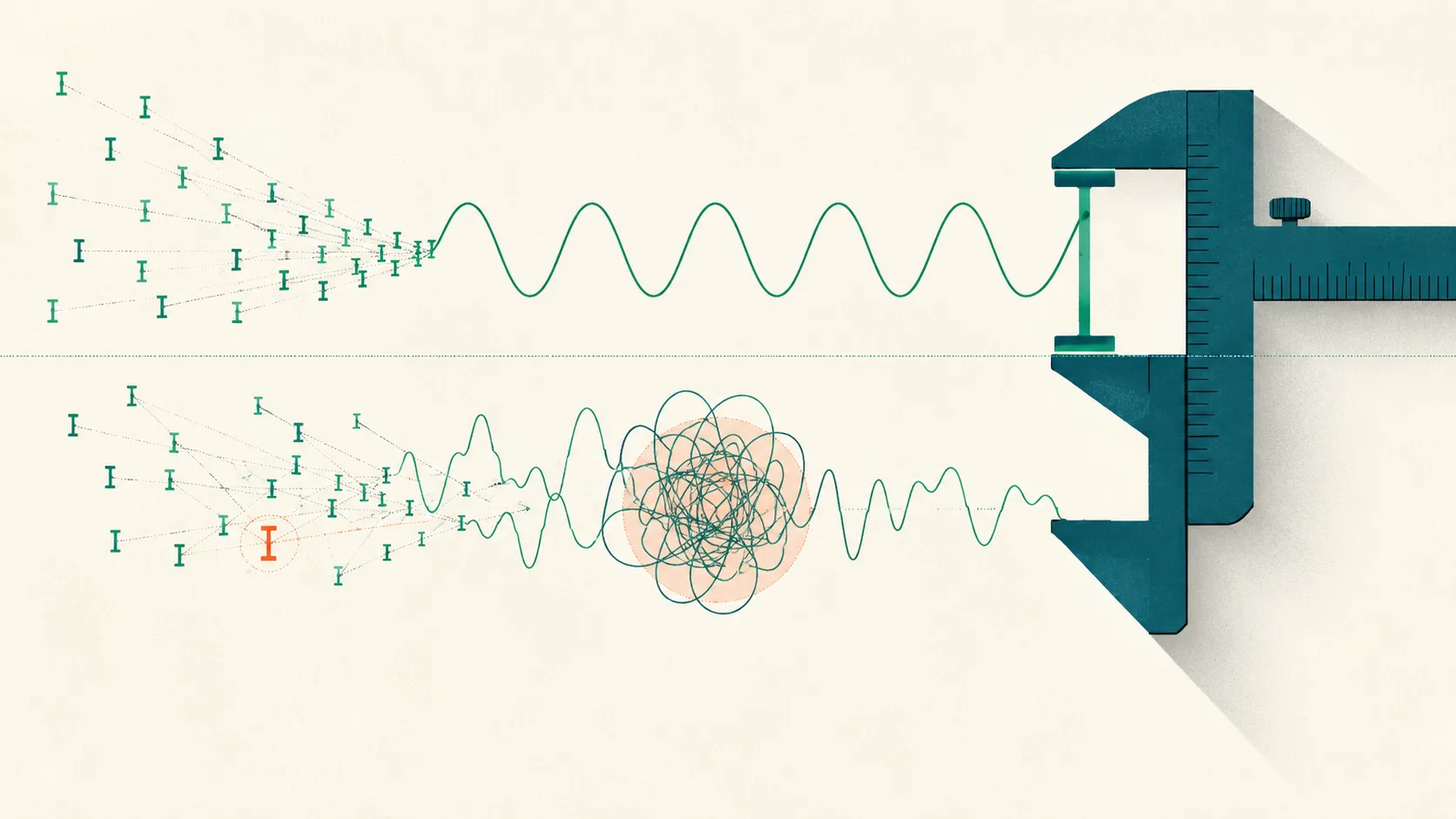
The most-cited answer to the expert vs crowd annotation question is a ratio: for many natural language tasks, about four aggregated non-expert labels equal one expert’s. Snow, O’Connor, Jurafsky and Ng measured it directly—on an affect-recognition task, an average of four Mechanical Turk labels per item was enough to emulate expert-level quality (Snow et al., 2008). That single number launched a decade of “just crowdsource it.”
It is also where most teams get the tradeoff wrong. The ratio is real, but it is not universal. It holds where the judgment is natural and learnable, and it quietly breaks where the label depends on training a non-expert doesn’t have. This post maps that boundary: where a crowd genuinely rivals experts, where aggregation rescues noisy labels, and where clinical or specialized judgment makes the four-to-one math collapse. The aim is a decision you can defend on your task, not a slogan.
Expert vs crowd annotation: what does the evidence show?
On general-purpose tasks, aggregated non-experts rival experts; on specialized tasks, they don’t. The expert vs crowd annotation literature is unusually consistent on this split: where a label is natural and learnable, a small crowd combined with aggregation reaches expert-level quality, and where the label depends on domain training, the gap stays open.
The foundational result is Snow et al. (2008). Across five natural language tasks—affect recognition, word similarity, recognizing textual entailment, event temporal ordering, and word sense disambiguation—non-expert Mechanical Turk labels showed high agreement with expert gold standards. For affect recognition, they quantified it: an average of four non-expert labels per item was enough to emulate an expert.
More striking, for five of seven task-datasets a model trained on a single non-expert label set outperformed one trained on a single expert’s labels. The reason is that pooling diverse annotators cancels the individual bias every labeler carries, expert included (Snow et al., 2008).
The pattern generalizes beyond text. Evaluating machine-translation quality, Callison-Burch (2009) found that crowd rankings of MT quality reached expert-level agreement, recreating an entire workshop’s human evaluation for roughly $10; in a separate test, crowd-produced translations for Spanish, German, and Chinese fell within one standard deviation of professional LDC translators. On multi-label image annotation, Nowak and Rüger (2010) reported inter-annotator agreement above 90% among expert annotators, and showed that a majority vote over Mechanical Turk labels filtered non-expert noise into an annotation set of quality comparable to the experts’. Three different modalities, one conclusion: for accessible judgments, aggregation buys you an expert-grade label from non-expert parts.
When can a crowd match experts?
A crowd matches experts when the task is accessible to a motivated layperson and you aggregate several independent labels. Two conditions carry the result: low tacit-knowledge demand (the judgment can be learned from a few examples) and redundancy (enough labels per item that individual noise averages out).
The redundancy half has its own foundational study. Sheng, Provost and Ipeirotis (2008) showed that repeated labeling improves both data quality and downstream model quality once single-labeler accuracy is imperfect—and, counterintuitively, that repeated labeling can beat single labeling even when labels are not particularly cheap. Their sharper finding is that you should not label everything the same number of times: selectively re-labeling the items where annotators disagree is more efficient than blanket redundancy. That is the quantitative companion to this whole question, and it is worth reading alongside how many annotators per item you actually need.
Aggregation is not the only lever. Snow et al. (2008) also introduced a simple bias-correction step that significantly improved non-expert quality on two of their tasks, by learning and subtracting each worker’s systematic tendency. The upshot: for the left-hand column of tasks, quality is a design problem you solve with redundancy, bias correction, and clear instructions—not a reason to hire experts. And it is a genuinely different problem from pay: raising the rate mostly buys speed, not accuracy, as the evidence in does pay improve annotation quality shows.
When does domain expertise actually matter?
Domain expertise matters when the label encodes tacit knowledge—the judgment an expert can apply but can’t fully write down. Michael Polanyi’s phrase for it, “we know more than we can tell,” names the exact failure mode of crowdsourcing (Polanyi, 1966): if the expert can’t fully articulate the rule, a layperson can’t learn it from a paragraph of instructions, and no amount of averaging reconstructs a concept the crowd never held.
The medical-imaging literature is the cleanest place to watch this happen, because it directly benchmarks experts against crowds. Gurari et al. (2015) compared trained experts, crowdsourced non-experts, and algorithms on 305 biomedical objects across six datasets. Their headline is often read as pro-crowd—non-experts were “reliable” enough to include in a lab protocol—but the ranking was unambiguous: experts first, non-experts second, algorithms last. Even in a paper arguing that crowds are usable, the experts still won.
The limit shows most clearly when you try to aggregate your way out of it. O’Neil et al. (2017) had non-experts delineate pathological patterns in CT lung scans; individual non-expert agreement ranged widely (Dice 0.41 to 0.77) against a reference whose own repeatability was 0.81. Combining many observers by majority vote matched that reference for five of seven patterns.
But for the two hardest patterns—centered on ground-glass opacity—more observers could not bring the crowd into agreement, because the raters simply held a different idea of where the boundary was than the expert did. That is the tell: aggregation collapses variance, but it cannot manufacture a shared definition the crowd never had.
This is why medical imaging built STAPLE. Warfield, Zou and Wells (2004) developed an expectation-maximization algorithm that fuses a collection of segmentations into a probabilistic estimate of the truth while scoring each rater’s performance—designed for panels of trained experts who nonetheless disagree. The field’s response to hard judgments was to reconcile expert opinions, not to outvote them with novices.
Ørting et al. (2020), surveying crowdsourcing across medical image analysis, found the same operational reality: crowds are valid for many tasks, but the tasks are typically simplified or decomposed for non-experts, expert supervision is assumed, and the gold standard usually comes from one or several experts.
Structured clinical scales sit squarely in this territory. Rating depressive severity from an interview on the ten-item, clinician-rated MADRS (Montgomery & Åsberg, 1979) is not a matter of trying harder; it is a matter of applying anchored item definitions the same way each time. Formal thought disorder scored on Andreasen’s TLC (1986), or symptom severity on the clinician-rated Hamilton Depression Rating Scale (Hamilton, 1960), only produce reliable labels once raters are trained and calibrated against a common standard. For a longer treatment of who should be in the rater pool, see the ideal annotator background.
Expert vs crowd annotation: a decision guide
Use the signals in your task, not the headline, to choose. The expert vs crowd annotation decision comes down to how much tacit knowledge the label demands, how contested the construct is, and what an error costs—read across a row and the model picks itself.
| Signal in your task | Lean crowd (with aggregation) | Lean expert (or expert-supervised) |
|---|---|---|
| Tacit-knowledge demand | Low—a motivated layperson can learn it from a few examples | High—requires trained clinical or technical judgment |
| Construct clarity | Objective or convergent; raters agree once instructed | Contested; the boundary itself is debated among experts |
| What aggregation buys | Near-expert quality at ~4+ labels (Snow et al., 2008) | Little, if the crowd lacks the concept (O'Neil et al., 2017) |
| Volume you need | Large—crowd economics dominate | Small-to-moderate—expert time is the binding constraint |
| Cost of a wrong label | Tolerable or correctable downstream | High-stakes (clinical, legal, safety) |
| Best-fit model | Screened, trained crowd + majority vote | Expert panel, or experts-set-standard + crowd-scales hybrid |
How the hybrid model works in practice
The durable answer is neither pure crowd nor pure expert: experts define the schema and adjudicate the hard cases, a screened and trained crowd handles the volume, and aggregation plus gold checks hold quality in between. STAPLE is the expert-panel version of this idea (Warfield, Zou & Wells, 2004); the crowd version is screen-and-train plus redundant labeling.
Two moves do most of the work. First, put expertise into the guidelines rather than only into the annotators—anchored definitions and worked edge cases let a trained crowd apply an expert’s judgment, up to the limit of what can be written down (see annotation guidelines that work). Second, invest in the people, not just the filter: screening candidates for aptitude and training them on the coding technique moves quality more than any post-hoc aggregation trick, which is the argument in screen and train your annotators. Where even a trained crowd stalls—the two-pattern problem from O’Neil—that item belongs to an expert or to adjudication, and knowing which items those are is itself a reliability signal. On very high volumes, a model first pass changes the arithmetic again; synthetic data versus human annotation covers where cheap labels stop being safe, and how many annotators you need for medical images covers redundancy on high-stakes tasks.
A worked example: two labeling jobs, two answers
Here is a synthetic illustration—round numbers, no real project—of the split the research predicts. A team runs two labeling jobs off the same interview transcripts, on the same platform, with the same worker pool.
Job A: symptom mention detection. The question is binary and concrete: does this utterance mention a sleep problem? A motivated non-expert learns it from five examples. With five crowd labels per item and a majority vote, agreement against an expert-adjudicated gold set lands around Cohen’s κ ≈ 0.82—substantial, and cheap. This is the left column: accessible construct, redundancy does the rest.
Job B: rate the severity of formal thought disorder. The question asks for a graded clinical judgment from a transcript. Untrained crowd workers reach only κ ≈ 0.35 against expert gold, and adding labels barely moves it—more readers converge on the same misreading of the construct, exactly the O’Neil pattern. A pair of raters trained on the scale and calibrated against worked examples reaches κ ≈ 0.76 with far fewer labels.
Same platform, opposite verdict. The lesson isn’t “crowds are bad” or “experts are always worth it”; it’s that the task’s tacit-knowledge demand decided the answer before a single label was collected.
Where Tagaroo fits
Tagaroo is built for the hybrid case. It is a schema-first annotation workspace: you define a coding scheme once with anchored definitions and examples, an AI agent takes a first pass, and human reviewers correct it—with inter-rater reliability, gold-standard checks, and adjudication in the workflow. That puts expert judgment where the evidence says it belongs, in the schema and the hard cases, while a trained reviewer pool or a model handles the throughput.
The boundary is worth stating plainly. If your only goal is to push a huge volume of genuinely simple microtasks through the cheapest possible pool, a bare crowdsourcing marketplace is a different, cheaper tool. Tagaroo’s strength is the specialist middle—contested constructs, clinical and research coding, tasks where reliability has to be measured rather than assumed. On data handling it takes a de-identify-first path: strip direct identifiers before upload, with an anonymous browser-side trial mode so trial data never leaves your machine (see the privacy policy for specifics).
The practical upshot
Stop asking whether crowds beat experts and start asking what your label demands. For accessible, convergent judgments, the expert vs crowd annotation math favors the crowd: aggregate roughly four or more labels, correct for bias, and you reach expert-grade quality for a fraction of the cost (Snow et al., 2008; Sheng, Provost & Ipeirotis, 2008). For tacit, contested, high-stakes judgments, no amount of averaging substitutes for training, and the right structure is experts setting a standard that a calibrated crowd then scales (Gurari et al., 2015; Ørting et al., 2020).
If you change one thing, change this: classify each task by its tacit-knowledge demand before you choose a workforce. Then define your scheme and calibrate your raters in Tagaroo so the expertise lives in the schema, and the crowd—or the model—can safely carry the volume.
References
- Snow R, O’Connor B, Jurafsky D, Ng AY. Cheap and Fast—But is it Good? Evaluating Non-Expert Annotations for Natural Language Tasks. Proceedings of the 2008 Conference on Empirical Methods in Natural Language Processing (EMNLP). 2008:254–263. aclanthology.org/D08-1027
- Callison-Burch C. Fast, Cheap, and Creative: Evaluating Translation Quality Using Amazon’s Mechanical Turk. Proceedings of the 2009 Conference on Empirical Methods in Natural Language Processing (EMNLP). 2009:286–295. aclanthology.org/D09-1030
- Nowak S, Rüger S. How Reliable are Annotations via Crowdsourcing? A Study about Inter-annotator Agreement for Multi-label Image Annotation. Proceedings of the International Conference on Multimedia Information Retrieval (MIR ’10). 2010:557–566. doi:10.1145/1743384.1743478
- Sheng VS, Provost F, Ipeirotis PG. Get Another Label? Improving Data Quality and Data Mining Using Multiple, Noisy Labelers. Proceedings of the 14th ACM SIGKDD International Conference on Knowledge Discovery and Data Mining (KDD ’08). 2008:614–622. doi:10.1145/1401890.1401965
- Gurari D, Theriault D, Sameki M, et al. How to Collect Segmentations for Biomedical Images? A Benchmark Evaluating the Performance of Experts, Crowdsourced Non-Experts, and Algorithms. IEEE Winter Conference on Applications of Computer Vision (WACV). 2015:1169–1176. PDF
- O’Neil AQ, Murchison JT, van Beek EJR, Goatman KA. Crowdsourcing Labels for Pathological Patterns in CT Lung Scans: Can Non-experts Contribute Expert-Quality Ground Truth? MICCAI 2017 Workshop on Large-scale Annotation of Biomedical Data and Expert Label Synthesis (LABELS). 2017:96–105. PDF
- Ørting SN, Doyle A, van Hilten A, et al. A Survey of Crowdsourcing in Medical Image Analysis. Human Computation. 2020;7(1):1–40. doi:10.15346/hc.v7i1.111
- Warfield SK, Zou KH, Wells WM. Simultaneous Truth and Performance Level Estimation (STAPLE): An Algorithm for the Validation of Image Segmentation. IEEE Transactions on Medical Imaging. 2004;23(7):903–921. doi:10.1109/TMI.2004.828354
- Polanyi M. The Tacit Dimension. Doubleday; 1966.
Frequently asked questions
- Can non-experts really match expert annotators?
- On many general-purpose tasks, yes—once you aggregate several independent labels. Snow et al. (2008) found that an average of four non-expert Mechanical Turk labels per item emulated expert-level quality on affect recognition, and Callison-Burch (2009) showed crowd rankings of translation quality reached expert-level agreement (recreating a full evaluation workshop for about $10), and that crowd-produced translations for Spanish, German, and Chinese scored within one standard deviation of professional LDC translators. On specialized clinical or technical tasks the gap persists: in a biomedical-segmentation benchmark the ranking was experts first, non-experts second, algorithms last (Gurari et al., 2015).
- How many non-expert labels equal one expert?
- About four for accessible NLP tasks—Snow et al. (2008) needed an average of four non-expert labels per item to emulate an expert on affect recognition. The mechanism is aggregation: majority vote cancels individual bias so a pooled non-expert set rivals an expert one (Nowak & Rüger, 2010; Sheng, Provost & Ipeirotis, 2008). The ratio rises, and can stop converging entirely, as the task's demand for domain training rises (O'Neil et al., 2017).
- When do I actually need domain experts?
- When the label encodes tacit knowledge or a contested construct—clinical severity, pathology, legal judgments—where the answer depends on training a layperson does not have. Biomedical image segmentation ranked trained experts above crowdsourced non-experts (Gurari et al., 2015), and expert-consensus methods such as STAPLE exist precisely because even experts vary and their judgments must be reconciled rather than outvoted by novices (Warfield, Zou & Wells, 2004).
- Does aggregating more crowd labels always close the gap?
- No. Aggregation cancels noise, not missing expertise. Pooling many non-expert readings of CT lung scans matched the expert reference for five of seven patterns, but for the two most ambiguous patterns extra observers could not bring the crowd into agreement, because the construct boundary itself was contested (O'Neil et al., 2017). When the crowd lacks the concept, more labels converge on the same wrong answer.
- What is the most cost-effective expert-vs-crowd setup?
- A hybrid. Experts define the schema and adjudicate the hard cases; a screened, trained crowd scales the volume with redundant labeling and gold-standard checks (Ørting et al., 2020; Sheng, Provost & Ipeirotis, 2008). Spend scarce expert time on the standard and the edge cases, and crowd time on throughput—the reverse of paying experts to grind through easy items.
Keep reading
 Annotation Operations & Ethics
Does Pay Improve Annotation Quality? What Research Shows
Does pay improve annotation quality? Higher pay lifts speed, participation, and fairness—but rarely accuracy. See what really drives label quality.
 Annotation Operations & Ethics
How Many Annotators Per Item? Redundancy and the Cost Curve
How many annotators per item do you need? One label is risky. Compare majority vote, Dawid-Skene, and MACE, and see where extra labels stop paying off.
 Image & Multimodal Annotation
How Many Annotators Medical Images Need: A Consensus Guide
How many annotators medical images need depends on clinical risk, from spot-checking low-risk labels to blind multi-reader reads with adjudication.
Put this into practice
Tagaroo turns any rating scale or coding scheme into a guided annotation workflow—with inter-rater reliability computed as you go.