The NICHD Protocol: Coding Interviewer Prompt Types
The NICHD protocol classifies a forensic interviewer's prompts from open to suggestive. See the five types, why open prompts win, and how to code them.
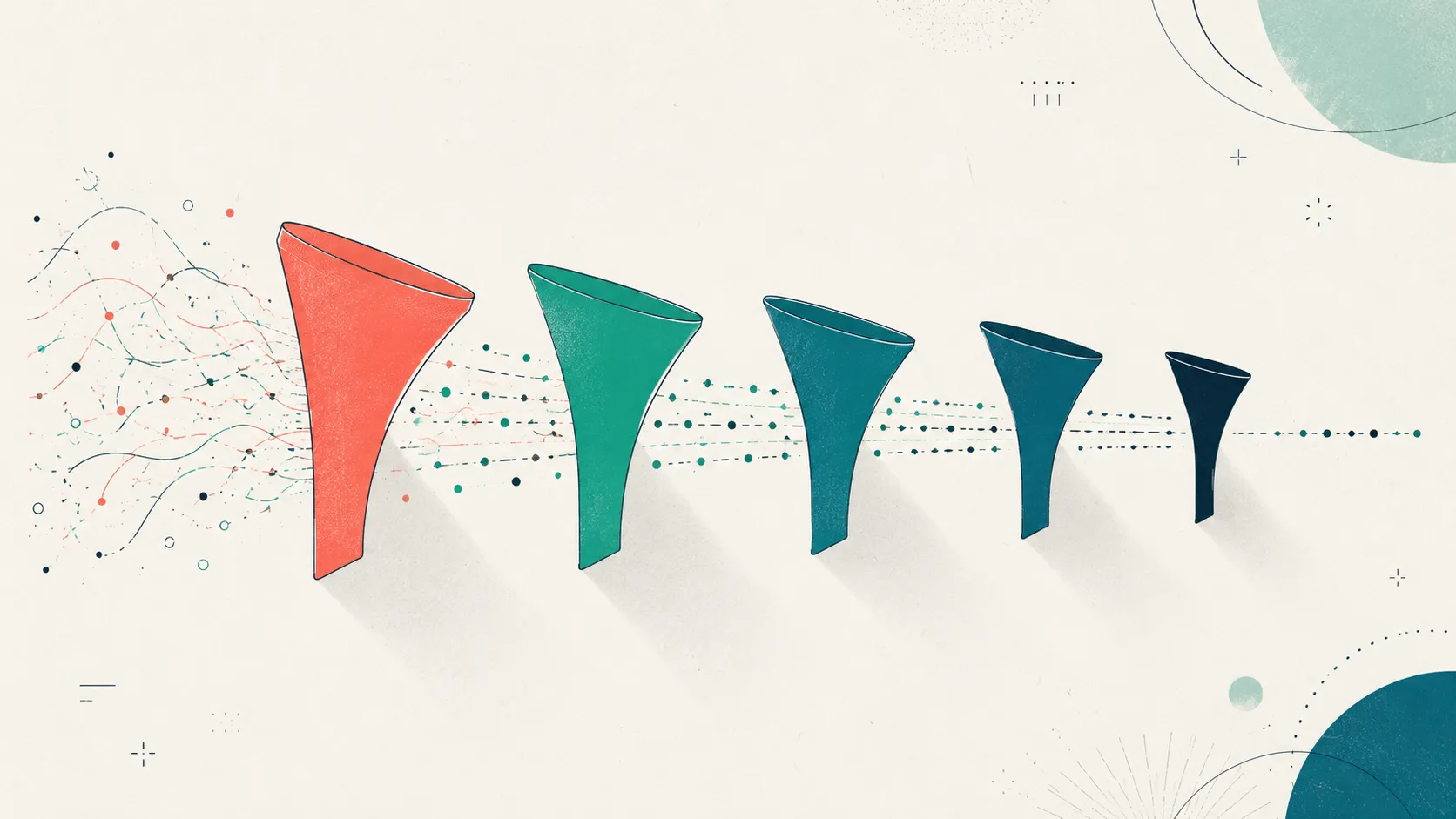
Most training on interviewing children focuses on the child—their memory, their suggestibility, their reluctance. The NICHD protocol made its name by flipping the lens onto the interviewer. Its central insight is that the single biggest determinant of whether a child’s account is reliable is the kind of prompt the interviewer uses, and it turns that insight into a five-category code you can apply to a transcript. The result is an instrument that audits the interviewer, not the witness (Lamb et al., 2007).
What is the NICHD protocol?
The NICHD Investigative Interview Protocol is the most extensively validated framework for interviewing children about suspected abuse, developed by Michael Lamb and colleagues at the US National Institute of Child Health and Human Development (Lamb et al., 2007). It structures the whole interview, but its most-cited contribution is a taxonomy of interviewer prompt types ordered by how much each shapes the child’s answer.
One point keeps the scope honest: the five prompt types are the substantive-phase question categories, not the entire protocol. A full NICHD interview also includes an introduction, rapport-building, a practice narrative on a neutral event, ground rules, and a careful transition into the substantive phase before free-recall questioning begins (Lamb et al., 2008). The prompt taxonomy is the part you code utterance by utterance, and it is the part that makes the protocol a quality-assurance tool.
The five prompt types, from open to suggestive
The five prompt types form a continuum from free recall, where the child supplies the content, to recognition, where the interviewer supplies it and the child reacts (Lamb et al., 2007). The table defines each type with a synthetic example, ordered from least to most shaping.
| Prompt type | What it does | Example |
|---|---|---|
| Invitation / open | Input-free request to recall; the child supplies all content | "Tell me everything that happened, from the beginning." |
| Cued invitation | Open prompt pivoting on a detail the child already mentioned | "You mentioned a kitchen—tell me more about the kitchen." |
| Directive / wh- | Cued recall: a wh- question about an already-mentioned detail | "What was he wearing?" |
| Option-posing / yes-no | Introduces a new detail for the child to confirm, deny, or choose | "Did this happen once or more than once?" |
| Suggestive | Communicates the expected answer or assumes undisclosed information | "He told you not to tell, didn't he?" |
The order is the message. Invitations and cued invitations rely on recall; directive prompts sit in between; option-posing and suggestive prompts rely on recognition and increasingly put words in the child’s mouth. Best practice maximizes the first two and treats the last two as last resorts.
Why do open invitations produce better evidence?
Open invitations produce better forensic evidence because they tap free recall, and free-recall reporting is both richer and more accurate than recognition. Responses to individual free-recall prompts are three to five times more informative than responses to more focused prompts (Lamb et al., 2007).
The mechanism is a basic distinction in memory: recall versus recognition. When a child answers an invitation, they retrieve and report self-generated content; when they answer an option-posing or suggestive prompt, they react to content the interviewer introduced, which raises the risk of error and acquiescence—especially in young children (Lamb et al., 2003).
The forensic stakes make the difference concrete. In one synthesis, preschoolers provided about half of the forensically relevant details and more than 80% of their initial disclosures of abuse in response to free-recall prompts (Lamb et al., 2007). That figure is specific to preschoolers, but the principle generalizes: the more the interviewer supplies, the less the account is the child’s own.
How the protocol changes interviewer behavior
Adopting the protocol measurably shifts how interviewers ask questions, which is the whole point of coding prompt types. Interviewers trained on the NICHD protocol use at least three times more open-ended prompts and roughly half as many option-posing and suggestive prompts as they did before (Lamb et al., 2007).
That shift is why prompt-type distributions double as a quality metric. If you code an interview and find it is mostly directive and option-posing prompts, you have an actionable, specific finding—“open the interview with more invitations”—rather than a vague sense that it “could have been better.” This is the same move the OPTION shared decision-making scale makes in medicine: code the professional’s behavior so you can improve it.
How reliable is prompt-type coding?
Prompt-type coding is highly reliable, which sets it apart from the interpretive scales elsewhere in this library. Because a prompt’s type is a concrete, surface-level property of the interviewer’s utterance, trained coders agree at very high rates: one field study reported Cohen’s kappa of 0.922 for classifying utterances into invitation, directive, option-posing, and suggestive types (Erens et al., 2022).
The reliability is high enough that automation is now viable: a machine-learning classifier matched trained human coders at 95% agreement (kappa 0.93) on NICHD prompt types (Szojka et al., 2025). Contrast that with the far lower agreement that interpretive elements like a narrative’s evaluation or an argument’s claim tend to attract, and the lesson is clear: code surface features when you can, because they are where humans and machines agree. If you are computing these coefficients, the Cohen’s kappa and inter-rater reliability guide explains why a κ above 0.90 counts as almost-perfect agreement.
How do you code interviewer prompts in a transcript?
To code the NICHD prompt types, tag each interviewer utterance with the single type it belongs to—instance-mode annotation applied to the interviewer’s turns, not the child’s. The child’s responses are scored separately for the detail they contain.
Consider a short synthetic sequence:
Interviewer: Tell me everything that happened, from the beginning. [invitation]
Interviewer: You mentioned the kitchen—tell me more about that. [cued invitation]
Interviewer: What time of day was it? [directive]
Interviewer: Was anyone else there, yes or no? [option-posing]
Interviewer: You were scared, weren’t you? [suggestive]
Tagging each prompt keeps the interviewer’s technique visible and countable, so a supervisor or researcher can check the call against the exact words and compute the prompt-type distribution. That is what makes the NICHD prompt-type scheme reproducible enough to audit interviews at scale, and coding the professional’s conduct rather than the subject’s is a pattern it shares with the empathic communication coding system.
On data handling: transcripts of child forensic interviews are among the most sensitive records that exist, subject to strict legal and safeguarding controls. Nothing here is a substitute for those controls. The sane technical default is de-identified text and a privacy-first setup—Tagaroo supports a browser-side anonymous mode so content can stay local—but real forensic material must be handled strictly within your jurisdiction’s evidentiary and safeguarding rules. The empathic communication coding system post covers the same privacy discipline for clinical talk.
Common mistakes when coding prompt types
The recurring errors come from misreading what the scheme codes:
- Coding the child instead of the interviewer. The prompt taxonomy classifies the interviewer’s utterances. The child’s account is scored separately (Lamb et al., 2007).
- Treating the five prompts as the whole protocol. They are the substantive-phase question types; the protocol also has rapport, a practice narrative, and ground rules (Lamb et al., 2008).
- Overstating a single accuracy number. The defensible figures are ratios (three-to-five-times-more-informative), and even the preschooler disclosure figure is age-specific. Avoid quoting a lone “X% accurate.”
- Forgetting facilitators. Some coding schemes add a sixth category for non-suggestive encouragers (“uh-huh,” “tell me more”); decide in advance how you handle them.
The practical upshot: the NICHD protocol works because it moved the question from “is this child reliable?” to “is this interviewer using prompts that let the child be reliable?” Code the interviewer’s prompts by type, favor the open end of the continuum, and use the distribution as a concrete, reliable measure of interview quality.
References
- Lamb, M. E., Orbach, Y., Hershkowitz, I., Esplin, P. W., & Horowitz, D. (2007). A structured forensic interview protocol improves the quality and informativeness of investigative interviews with children: a review of research using the NICHD Investigative Interview Protocol. Child Abuse & Neglect, 31(11–12), 1201–1231. doi:10.1016/j.chiabu.2007.03.021
- Orbach, Y., Hershkowitz, I., Lamb, M. E., Sternberg, K. J., Esplin, P. W., & Horowitz, D. (2000). Assessing the value of structured protocols for forensic interviews of alleged child abuse victims. Child Abuse & Neglect, 24(6), 733–752. doi:10.1016/S0145-2134(00)00137-X
- Sternberg, K. J., Lamb, M. E., Hershkowitz, I., Esplin, P. W., Redlich, A., & Sunshine, N. (1996). The relation between investigative utterance types and the informativeness of child witnesses. Journal of Applied Developmental Psychology, 17(3), 439–451. doi:10.1016/S0193-3973(96)90036-2
- Lamb, M. E., Sternberg, K. J., Orbach, Y., Esplin, P. W., Stewart, H., & Mitchell, S. (2003). Age differences in young children’s responses to open-ended invitations in the course of forensic interviews. Journal of Consulting and Clinical Psychology, 71(5), 926–934. doi:10.1037/0022-006X.71.5.926
- Lamb, M. E., Hershkowitz, I., Orbach, Y., & Esplin, P. W. (2008). Tell Me What Happened: Structured Investigative Interviews of Child Victims and Witnesses. Wiley. doi:10.1002/9780470773291
- Erens, B., Otgaar, H., de Ruiter, C., van Bragt, L., & Hershkowitz, I. (2022). Investigative interviewing practices in Dutch child-protection interviews. Applied Cognitive Psychology, 36(1), 7–18. doi:10.1002/acp.3893
- Szojka, Z. A., Yashraj, A., & Lyon, T. D. (2025). Automating the classification of question types in child forensic interviews. Law and Human Behavior, 49(2), 163–172. doi:10.1037/lhb0000590
- Benia, L. R., Hauck-Filho, N., Dillenburg, M., & Stein, L. M. (2015). The NICHD investigative interview protocol: a meta-analytic review. Journal of Child Sexual Abuse, 24(3), 259–279. doi:10.1080/10538712.2015.1006749
If you code investigative-interview quality, Tagaroo turns the NICHD prompt-type scheme into a guided, evidence-anchored annotation workflow—with inter-rater reliability computed as your coders work.
Frequently asked questions
- What is the NICHD investigative interview protocol?
- The NICHD protocol is the most extensively validated framework for interviewing children about suspected abuse (Lamb et al., 2007). A core contribution is its taxonomy of interviewer prompt types—invitation, cued invitation, directive, option-posing, and suggestive—ordered by how much they shape the child's answer. It codes the interviewer's utterances, not the child's, which makes it a training and quality-assurance tool as much as a research code.
- What are the five NICHD prompt types?
- The five substantive-phase prompt types are: invitation (an open, input-free request to recall), cued invitation (an open prompt pivoting on a detail the child already mentioned), directive (a wh- question about an already-mentioned detail), option-posing (a yes/no or forced-choice question introducing new details), and suggestive (a prompt communicating the expected answer) (Lamb et al., 2007). They form a continuum from free recall to recognition.
- Why are open-ended prompts better in forensic interviews?
- Open invitations tap free recall, where the child reports self-generated content, and free-recall responses are three to five times more informative than responses to focused prompts (Lamb et al., 2007). Option-posing and suggestive prompts engage recognition memory, which carries a higher error risk—including acquiescence—especially in young children (Lamb et al., 2003).
- Does the NICHD protocol code the child or the interviewer?
- It codes the interviewer. The five prompt types classify the interviewer's utterances by how much they shape the response; the child's answers are scored separately for detail and informativeness (Lamb et al., 2007). This is what makes prompt-type coding a way to audit interviewing quality rather than the witness.
- How reliable is prompt-type coding?
- Very reliable. Classifying utterances into invitation, directive, option-posing, and suggestive types reached Cohen's kappa of 0.922 in one field study (Erens et al., 2022), and a machine-learning coder matched trained humans at 95% agreement, kappa 0.93 (Szojka et al., 2025). Prompt type is a concrete, surface-level feature, which is why it codes far more reliably than interpretive constructs.
Keep reading
 Methods & Frameworks
The OPTION Scale: Measuring Shared Decision-Making
The OPTION scale rates how far a clinician involves the patient in a decision. See the behaviors it scores, why real scores are low, and how to code it.
 Methods & Frameworks
The Empathic Communication Coding System, Explained
The Empathic Communication Coding System codes empathy in clinical talk as a two-step sequence: patient opportunities, then a 0–6 provider response ladder.
 Reliability & Agreement
Cohen's Kappa: How to Compute and Interpret Agreement
How to compute Cohen's kappa and weighted kappa by hand, read the result honestly, and know when to use Krippendorff's alpha, ICC, or Gwet's AC1 instead.
Put this into practice
Tagaroo turns any rating scale or coding scheme into a guided annotation workflow—with inter-rater reliability computed as you go.