Hamilton Anxiety Rating Scale: Psychic vs Somatic HAM-A
The Hamilton Anxiety Rating Scale (HAM-A) is a 14-item clinician measure. See the psychic and somatic items, the scoring, the cutoffs, and how to code it.
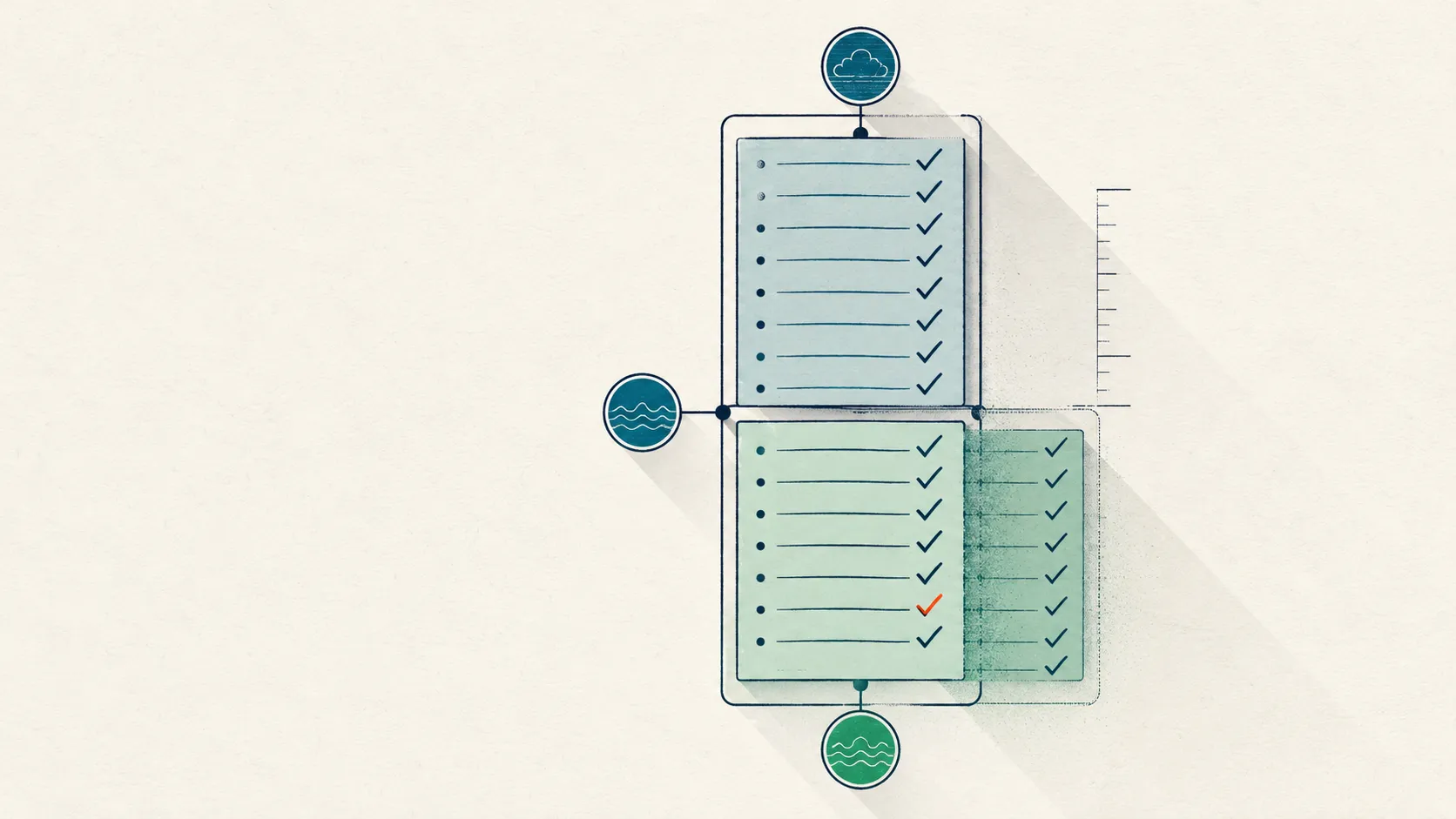
The Hamilton Anxiety Rating Scale is the oldest anxiety scale still in wide use—Max Hamilton published it in 1959—and its defining feature is a split that still shapes how anxiety is measured: it separates psychic anxiety (the mental symptoms) from somatic anxiety (the bodily ones) (Hamilton, 1959). A clinician rates 14 items from 0 to 4, for a total between 0 and 56. That two-part structure is the scale’s greatest strength and its most cited weakness, because the somatic half can quietly register the side effects of the very drugs a trial is testing.
What is the Hamilton Anxiety Rating Scale?
The Hamilton Anxiety Rating Scale is a clinician-administered measure of anxiety severity, built from 14 items that a rater scores after interviewing the patient (Hamilton, 1959). It is one of the first standardized psychiatric rating scales of any kind, and it remains a common endpoint in anxiolytic drug trials more than sixty years later.
It is clinician-rated, not self-report, which is the first thing that sets it apart from modern screens. A trained interviewer judges each symptom’s severity from what the patient describes and how they present, rather than handing over a questionnaire. That makes the HAM-A richer and more somatically detailed than a self-report tool, but also slower, more training-dependent, and more vulnerable to rater drift. You can see the modeled item set on the HAM-A scale page.
Hamilton’s 1959 paper introduced the scale without a set of standard interview questions, a gap that shaped decades of its use. Raters improvised their own probes, which is a recipe for disagreement—an issue later structured guides were built to close.
How is the HAM-A scored?
HAM-A scoring sums 14 clinician-rated items, each scored 0 to 4, into a single total from 0 to 56 (Hamilton, 1959). The anchors are consistent across items: 0 = not present, 1 = mild, 2 = moderate, 3 = severe, 4 = very severe. There is no reverse-scoring and no weighting—every item contributes equally.
Because the scale predates the era of structured interviews, its reliability depends heavily on how it is administered. The Structured Interview Guide for the HAM-A (SIGH-A) later standardized the probes and anchor points, and Shear and colleagues found the structured format produced “similar but consistently higher” totals—about 4.2 points above the traditional unstructured administration—with good inter-rater and test-retest reliability (Shear et al., 2001). That offset has a practical consequence: mixing structured and unstructured administrations within one study introduces a systematic bias unrelated to the patients.
The 14 HAM-A items: psychic vs somatic anxiety
The 14 HAM-A items divide into two factors: psychic anxiety, the mental and emotional symptoms (items 1–6 and item 14), and somatic anxiety, the physical symptoms (items 7–13). This is the structure that gives the scale its analytic value—you can read a psychic subscore and a somatic subscore, not just a total.
| # | HAM-A item | Factor |
|---|---|---|
| 1 | Anxious mood (worry, anticipation of the worst) | Psychic |
| 2 | Tension (restlessness, startle, inability to relax) | Psychic |
| 3 | Fears (of the dark, strangers, being alone, animals) | Psychic |
| 4 | Insomnia (broken or unrefreshing sleep) | Psychic |
| 5 | Intellectual / cognitive (poor concentration, memory) | Psychic |
| 6 | Depressed mood (loss of interest, diurnal swing) | Psychic |
| 7 | Somatic, muscular (aches, stiffness, twitching) | Somatic |
| 8 | Somatic, sensory (tinnitus, blurred vision, flushes) | Somatic |
| 9 | Cardiovascular (palpitations, chest pain) | Somatic |
| 10 | Respiratory (chest tightness, breathlessness) | Somatic |
| 11 | Gastrointestinal (nausea, abdominal pain) | Somatic |
| 12 | Genitourinary (urinary frequency, loss of libido) | Somatic |
| 13 | Autonomic (dry mouth, sweating, dizziness) | Somatic |
| 14 | Behavior at interview (observed fidgeting, tremor) | Psychic |
Tagaroo models 11 of the 14 items—the ones a patient can be expected to describe in words. It leaves out the somatic-sensory (8) and genitourinary (12) items, which are rarely volunteered in an interview, and behavior at interview (14), which is scored from observation rather than report. That is an engineering choice for text-transcript annotation, not an official HAM-A subscale; the full 14-item scale is what a clinical trial uses. Item 1 anchors the whole instrument with Hamilton’s own wording—anxious mood is “worries, anticipation of the worst, fearful anticipation, irritability.”
What do HAM-A scores mean?
HAM-A interpretation is genuinely unsettled, and pretending otherwise is the most common way the scale is misused. Two cutoff systems circulate, they disagree, and only one is empirically derived.
| Severity | Traditional set | Matza et al. (2010), empirical |
|---|---|---|
| None / minimal | — | ≤7 |
| Mild | ≤17 | 8–14 |
| Moderate | 18–24 (mild-to-moderate) | 15–23 |
| Severe | 25–30 (moderate-to-severe) | ≥24 |
| Very severe | 31–56 | — |
The traditional bands (≤17 mild, and so on) appear on countless clinical pages, but their origin is not traceable to a validation study—they propagate through secondary sources without a derivation. The alternative comes from data: Matza and colleagues used a 144-patient trial to derive optimal ranges of “mild anxiety = 8–14; moderate = 15–23; severe ≥ 24,” calibrated against clinicians’ global severity ratings (Matza et al., 2010). The two systems put the mild/moderate boundary in completely different places.
For change over time, trials lean on conventions rather than bands: response is usually a ≥50% reduction from the baseline total, and remission is often set at a total of 7 or below. The takeaway for anyone reading a HAM-A result: check which cutoff system was used before comparing “moderate” across two papers, because the word can mean a 15 or an 18 depending on the author.
The somatic problem: why the HAM-A struggles in drug trials
The HAM-A’s biggest limitation is that its somatic items overlap with medication side effects, so a drug’s adverse effects can look like unresolved anxiety. Dizziness, nausea, palpitations, and autonomic symptoms all score on the somatic subscale—and all are common side effects of psychiatric medication.
Maier and colleagues put it bluntly after testing the scale in anxiety and depression samples: “The major problems with the HAM-A are that (1) anxiolytic and antidepressant effects cannot be clearly distinguished; (2) the subscale of somatic anxiety is strongly related to somatic side effects. The applicability of the HAM-A in anxiolytic treatment studies is therefore limited” (Maier et al., 1988). That is a striking verdict about the field’s long-standing anxiety endpoint.
A second confound compounds the first. The psychic items—especially depressed mood (item 6), but also tension and insomnia—overlap heavily with depression scales, so in a patient with comorbid anxiety and depression the HAM-A total is inflated by depressive symptoms. The scale measures something real, but it does not cleanly isolate anxiety from either depression or drug effects. If reliability across raters matters for your study, that noise is worth quantifying with Cohen’s kappa and inter-rater reliability on the item level, where the somatic items tend to be the shakiest.
HAM-A vs GAD-7: which anxiety measure, and when?
The HAM-A and the GAD-7 answer different questions: the HAM-A is a clinician-rated severity endpoint, and the GAD-7 is a patient self-report screen. They are not interchangeable, and using one where the other belongs is a common design error.
| HAM-A | GAD-7 | |
|---|---|---|
| Type | Clinician-administered | Patient self-report |
| Items | 14 | 7 |
| Score range | 0–56 | 0–21 |
| Primary use | Severity endpoint in trials | Screening / case-finding |
| Coverage | Psychic and heavy somatic detail | Mostly psychic / worry |
| Origin | Hamilton, 1959 | Spitzer et al., 2006 |
| Administration cost | Trained rater, ~20+ min | Fast, self-completed |
Reach for the HAM-A when you need a graded severity endpoint judged by a trained rater—typically a treatment trial. Reach for the GAD-7 anxiety scale when you need fast case-finding at scale, where a self-report screen is the right tool. The HAM-A also has a natural sibling in its own family: the Hamilton Depression Rating Scale (HAM-D) shares Hamilton’s design and several overlapping items, which is exactly why anxiety and depression totals contaminate each other in comorbid patients.
How to score the HAM-A from an interview transcript
To score the HAM-A from a transcript, highlight the passage where the patient reports each symptom, then rate that evidence on the same 0–4 anchors—rather than filling in a form from memory. The HAM-A is an evidence-mode scale: you attach the rating to the words that justify it, which makes the score auditable.
Consider a short synthetic exchange:
Interviewer: How has this past week felt for you?
Subject: I can’t shake the sense that something bad is coming. I keep bracing for news that never arrives, and I’m on edge from the moment I wake up.
That reply supports rating item 1 (anxious mood) well above zero—Hamilton’s “anticipation of the worst” is almost verbatim—with the span “something bad is coming … bracing for news that never arrives” attached as the evidence. Do that across the items and the total stops being a black box: a reviewer can check each rating against the transcript. It also makes the HAM-A coding scheme reproducible enough to compute inter-rater reliability, which structured guides like the HARS-IG and SIGH-A are designed to support (Bruss et al., 1994; Shear et al., 2001).
On data handling: coding interview speech means working with sensitive clinical language, so the sane default is de-identified text and a privacy-first setup. Tagaroo supports a browser-side anonymous mode, so transcript content can stay local rather than being uploaded—worth checking against your ethics approval before any real interview data touches a tool.
Common HAM-A scoring mistakes
The most common HAM-A mistake is comparing totals across studies that used different cutoff systems, but a few others recur:
- Mixing structured and unstructured administration. The SIGH-A runs about 4 points higher than an unstructured interview (Shear et al., 2001). Pick one format and hold it constant across a study.
- Reading somatic scores as pure anxiety. In a medicated patient, the somatic subscale partly tracks side effects (Maier et al., 1988). Interpret the somatic factor with the drug in mind.
- Ignoring the depression overlap. A high HAM-A in a comorbid patient may be carrying depressive symptoms via items like depressed mood and insomnia. Read it alongside a depression measure, not instead of one.
- Treating the traditional bands as validated. The ≤17 / 18–24 / 25–30 set has no clear derivation; the Matza ranges do (Matza et al., 2010). State which you used.
None of these are reasons to abandon the HAM-A—it is historically important, richly somatic, and still the endpoint of many trials. They are reasons to report a HAM-A score with its context: the administration format, the cutoff system, the psychic and somatic subscores, and whether the number rests on evidence you can point to.
The practical upshot: the Hamilton Anxiety Rating Scale earns its place by measuring anxiety in real bodily and mental detail, but its psychic/somatic split is also where its confounds live. Score the items against the evidence, report the psychic and somatic subscores separately, and never compare “moderate” across papers without checking whose cutoffs they used.
References
- Hamilton, M. (1959). The assessment of anxiety states by rating. British Journal of Medical Psychology, 32(1), 50–55. doi:10.1111/j.2044-8341.1959.tb00467.x
- Maier, W., Buller, R., Philipp, M., & Heuser, I. (1988). The Hamilton Anxiety Scale: reliability, validity and sensitivity to change in anxiety and depressive disorders. Journal of Affective Disorders, 14(1), 61–68. doi:10.1016/0165-0327(88)90072-9
- Matza, L. S., Morlock, R., Sexton, C., Malley, K., & Feltner, D. (2010). Identifying HAM-A cutoffs for mild, moderate, and severe generalized anxiety disorder. International Journal of Methods in Psychiatric Research, 19(4), 223–232. doi:10.1002/mpr.323
- Shear, M. K., Vander Bilt, J., Rucci, P., Endicott, J., Lydiard, B., Otto, M. W., et al. (2001). Reliability and validity of a structured interview guide for the Hamilton Anxiety Rating Scale (SIGH-A). Depression and Anxiety, 13(4), 166–178. doi:10.1002/da.1033
- Bruss, G. S., Gruenberg, A. M., Goldstein, R. D., & Barber, J. P. (1994). Hamilton Anxiety Rating Scale Interview guide: joint interview and test-retest methods for interrater reliability. Psychiatry Research, 53(2), 191–202. doi:10.1016/0165-1781(94)90110-4
- Spitzer, R. L., Kroenke, K., Williams, J. B. W., & Löwe, B. (2006). A brief measure for assessing generalized anxiety disorder: the GAD-7. Archives of Internal Medicine, 166(10), 1092–1097. doi:10.1001/archinte.166.10.1092
If you code anxiety symptoms from interviews or track HAM-A change over time, Tagaroo turns the HAM-A scale into a guided, evidence-anchored annotation workflow—with inter-rater reliability computed as your coders work.
Frequently asked questions
- What is a normal score on the Hamilton Anxiety Rating Scale?
- On the HAM-A, an empirically derived analysis put no or minimal anxiety at a total of 7 or below, with mild anxiety at 8–14 (Matza et al., 2010). The scale runs from 0 to 56 across 14 items, so a 'normal' score sits at the low end. The HAM-A measures anxiety severity for research and monitoring; it is not itself a diagnosis.
- How is the HAM-A scored?
- The HAM-A is scored by a clinician who rates each of 14 items from 0 (not present) to 4 (very severe) and sums them, for a total of 0 to 56 (Hamilton, 1959). Items 1–6 plus item 14 form the psychic-anxiety factor; items 7–13 form the somatic-anxiety factor. There is no item weighting—each item counts the same.
- What is the difference between psychic and somatic anxiety on the HAM-A?
- Psychic anxiety is the mental and emotional side—anxious mood, tension, fears, concentration problems—captured by items 1–6 and item 14. Somatic anxiety is the bodily side—muscular, cardiovascular, respiratory, gastrointestinal, and autonomic symptoms—captured by items 7–13. The split matters because the somatic items can register medication side effects, which complicates drug-trial interpretation (Maier et al., 1988).
- What is the HAM-A cutoff for anxiety severity?
- Two systems compete. A traditional set uses ≤17 mild, 18–24 mild-to-moderate, and 25–30 moderate-to-severe, but its origin is not clearly traceable to a validation study. An empirically derived alternative sets mild at 8–14, moderate at 15–23, and severe at ≥24 (Matza et al., 2010). Always report which system you used, because 'moderate' means different totals in each.
- What is the difference between the HAM-A and the GAD-7?
- The HAM-A is a 14-item, clinician-administered severity scale (0–56) used mainly as a trial endpoint; the GAD-7 is a 7-item patient self-report screen (0–21) used for case-finding (Hamilton, 1959; Spitzer et al., 2006). The HAM-A captures heavy somatic detail the GAD-7 omits, but it needs a trained rater and is not a substitute screening tool.
Keep reading
 Rating Scales
Auditable Clinical Ratings: Score From the Transcript
Build an auditable clinical rating by tying every scale item to a quoted line, not a global impression. See how span-grounded scoring works.
 Rating Scales
BPRS vs PANSS: The Two Standard Psychosis Rating Scales
BPRS vs PANSS compared: item overlap, the positive-negative-general structure, trial usage, and score linking. See which psychosis scale to use.
 Rating Scales
Depression Rating Scales Compared: HAM-D, MADRS, PHQ-9
Depression rating scales compared: HAM-D, MADRS, PHQ-9, and content analysis by rater, item count, and change-sensitivity. See which fits your study.
Put this into practice
Tagaroo turns any rating scale or coding scheme into a guided annotation workflow—with inter-rater reliability computed as you go.