Model-Assisted Labeling for Images: Label Less, Cover More
Model-assisted labeling lets a model draft image labels so annotators correct, not create. How pre-labeling and active learning cut work honestly.
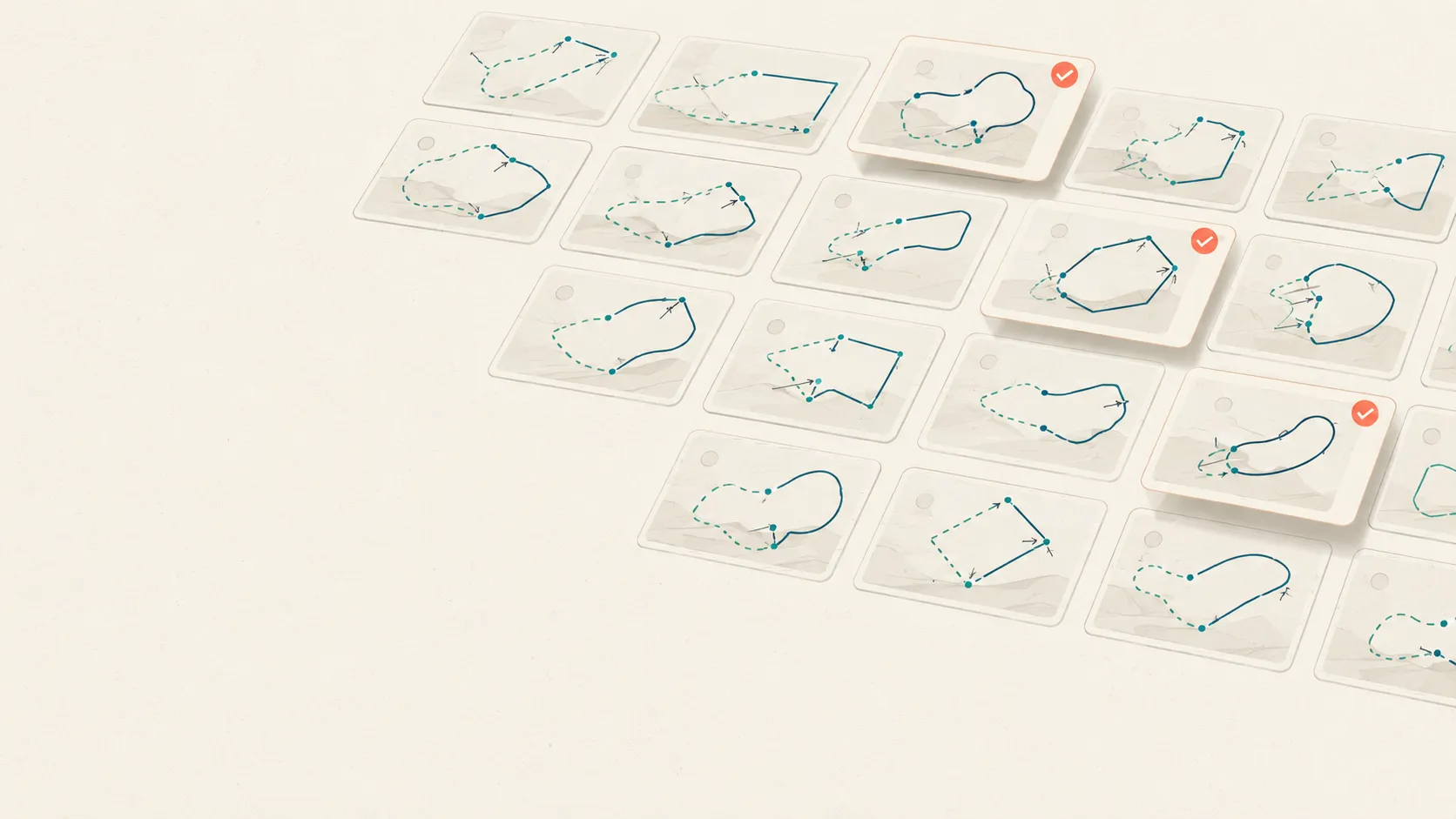
Model-assisted labeling is a simple trade: instead of drawing every image label from scratch, a model drafts the labels and a person corrects them. The work shifts from create to review, which is faster—but only if you stay honest about what an auto-label actually is. It is a suggestion, not ground truth, and someone qualified still has to verify it.
That caveat is the whole game. Teams that treat pre-labels as a head start ship better datasets faster; teams that treat them as finished labels ship confident, systematic error. This post walks the correct-not-create workflow, shows how active learning decides what to label next, works a synthetic cost example, and is blunt about where auto-labels stop being useful.
What is model-assisted labeling?
Model-assisted labeling is an annotation approach where a model suggests labels in real time—a proposed box, a one-click mask, an auto-completed polygon—and the annotator accepts, adjusts, or rejects each one (Voxel51, 2026). It is a form of auto-labeling, but the defining trait is that a human stays in the loop and in control, so nothing ships unreviewed. The point is not to remove the person; it is to change what the person spends time on.
It helps to place it among the neighboring approaches, because “AI labeling” gets used for five quite different things:
| Approach | When the model acts | Human role | Quality risk |
|---|---|---|---|
| Manual (from scratch) | Not at all | Draw every label by hand | Lowest, but slowest |
| Model-assisted | During labeling, interactively | Accept, adjust, or reject each suggestion | Low—nothing ships unreviewed |
| Pre-labeling | Before labeling, in batch | Correct a pre-filled draft | Moderate—tracks model accuracy |
| Agentic | In a background job | Teach the agent, then review | Moderate—depends on the review rate |
| Fully automatic | Without a human | Optional spot-check | Highest—unreviewed labels |
The practical difference between model-assisted and pre-labeling is timing. Model-assisted is interactive—the suggestion appears while you work. Pre-labeling is a batch job that fills a draft you then correct. Both live under the same honest rule: the label is human-approved before it counts.
Why does correct-not-create save time?
Correcting a decent draft is cheaper than drawing from a blank canvas, and the saving compounds across a dataset. The economics are the reason the whole approach exists: unlabeled images are often abundant and cheap, while expert labels are slow and expensive (Settles, 2009). Anything that turns “draw a polygon” into “nudge two vertices” attacks the expensive half.
But the saving is conditional, not automatic. Pre-labels only help when the model is good enough that fixing beats drawing; below that line, annotators spend longer untangling a wrong suggestion than they would have spent starting fresh. Vendor throughput claims make this concrete.
Read that number the right way. A 10x gain is a best case for easy images with high-contrast objects and forgiving boundaries. For subtle findings, overlapping structures, or anything where two experts would draw different masks, the gain shrinks and can go negative. Match your expectation to your data, not to the demo.
How does active learning choose what to label next?
Active learning is the strategy of letting the model pick which unlabeled examples a human should label next, instead of labeling in arbitrary order. Its founding idea is that a learner “can achieve greater accuracy with fewer training labels if it is allowed to choose the data from which it learns” (Settles, 2009). You label the examples that teach the model the most, and skip the ones it already handles.
The most common selection rule is uncertainty sampling: query the instances the model is least confident about. Other frameworks in the literature pick by committee disagreement, expected model change, or expected error reduction (Settles, 2009). For a labeling team, the mechanics matter less than the loop:
- Seed a small labeled set and train (or reuse) a rough model.
- Have the model score the unlabeled pool and rank it by uncertainty.
- Send the most informative examples to annotators.
- Add the corrected labels, retrain, and repeat.
The payoff is coverage: the same annotation budget buys a dataset that spends its labels on hard, informative cases rather than on easy ones the model would have gotten anyway. That is the “cover more” half of “label less, cover more.”
A worked example: model-assisted labeling on a synthetic batch
Here is a synthetic illustration—round numbers, no real data—to show where the time actually goes. Suppose a batch of 1,000 image regions, where drawing one segmentation mask from scratch takes about 40 seconds and correcting a usable pre-label takes about 12.
If the model produces a usable draft on 70% of images, the blended cost per image is roughly 0.7 × 12s + 0.3 × 40s ≈ 20s, against 40s for all-manual—close to half the labeling time. Now drop model accuracy to 40% usable drafts: 0.4 × 12s + 0.6 × 40s ≈ 29s. Still a saving, but a thinner one, and it assumes correcting a bad draft costs the same as drawing fresh, which is optimistic.
This is deliberately simplified: it ignores review overhead, automation bias, and the cost of building the seed model. It is enough to make the point that “AI pre-labeling saves time” is a claim with a threshold attached, not a universal truth. The type of label matters too—classification drafts are cheap to check, segmentation masks are not, which is worth weighing alongside the types of image annotation you actually need.
What are the honest limits of auto-labels?
An auto-label is a starting point, not ground truth—a hypothesis a qualified human confirms or overturns. This is the caveat every vendor sells around, so state it plainly: across the 2026 tool market, every platform’s AI pre-labeling still requires human review to reach production quality, and the human review step does not go away, it changes shape (Awesome Agents, 2026). If a pitch implies otherwise, distrust it.
The sharpest hidden risk is automation bias. When a model’s suggestions are usually right, annotators start rubber-stamping them and stop scrutinizing the hard cases—so error quietly concentrates exactly where the model is weakest (Voxel51, 2026). The pre-label feels like a productivity win while silently importing the model’s blind spots into your “human-verified” ground truth.
There is also a subtler trap: pre-labels can bias the human toward the model’s ontology. If the detector only knows five classes, annotators nudged by its boxes drift toward describing the world in those five classes, and genuinely novel findings go unrecorded. Keep an explicit “none of the above” path so the scheme can grow instead of quietly calcifying around what the model already sees.
How many auto-labels do you still need to verify?
You verify enough to defend the dataset, and the right rate is driven by risk, not by a flat percentage. A low-stakes triage flag and a segmentation mask feeding a clinical measurement do not deserve the same scrutiny. The deeper question—how many independent readers a label needs before you trust it—has its own answer in how many annotators medical images need; model-assistance changes the drafting, not that arithmetic.
On repeated labeling, the evidence is encouraging but conditional: labeling items multiple times “can improve label quality and model quality, but not always,” and “repeatedly labeling a carefully chosen set of points is generally preferable” to labeling everything twice (Sheng et al., 2008). That finding pairs naturally with active learning—spend your redundant labels where uncertainty and disagreement are highest, not uniformly across an easy pool.
The operating picture: use the model to draft and to rank, use humans to correct and to adjudicate, and concentrate both the correction effort and the redundant reads on the cases the model finds hardest. That is where model-assisted labeling and active learning reinforce each other instead of just saving keystrokes.
Where a curated scheme fits
The quality of a pre-label is capped by the clarity of the scheme it is drafting against—vague classes produce confident, inconsistent auto-labels that humans then argue over. A model can only suggest labels from a defined vocabulary, so the definitions do double duty: they constrain the model and they tell the reviewer what “correct” means. Get the scheme fuzzy and no amount of model assistance rescues you.
Clinical measurement solved this discipline decades ago, and image teams can borrow the pattern. A validated rating scale is a curated coding scheme with anchored definitions and a citation trail: look at how the MADRS specifies each depression item, or how the PHQ-9 fixes its nine items and their frequency anchors. That is the bar a pre-labeling ontology should aim for—every class defined tightly enough that a model’s draft and a human’s correction are judged against the same anchor.
Where Tagaroo fits
Tagaroo is a schema-first annotation workspace with an AI first pass: you define a coding scheme once, the agent takes the first pass at tagging against it—text, images, or samples—and a human corrects the draft, with inter-rater reliability and adjudication built into the workflow. It is the correct-not-create pattern this post argues for, with the honest caveat wired in: the AI pass is a starting point a qualified reviewer signs off on, never a finished label and never a diagnosis.
Be clear about the boundary. If you need industrial-scale pixel segmentation with specialized model-in-the-loop tooling and active-learning queues, a dedicated computer-vision platform is the right call—we compare the main ones in CVAT vs Labelbox vs V7, and survey the wider field in the best data annotation tools. Tagaroo’s strength is guided, schema-driven annotation against a curated taxonomy, whether that taxonomy codes a clinical interview or tags findings on an image; the same engine also backs annotation tools for LLM and RLHF work. For the end-to-end image pipeline it plugs into, start with the medical image annotation guide.
On data handling, Tagaroo takes a de-identify-first path rather than positioning itself as a PHI processor: its terms require you to strip direct identifiers before upload, its anonymous trial mode runs in the browser so trial images never leave your machine, and the stack is EU-hosted and GDPR-oriented. It is not a medical device. If your project must process raw identifiable data in the cloud, put that question to any vendor—including this one—before uploading; see the privacy policy for specifics.
The practical upshot
Model-assisted labeling earns its keep when you treat it as a way to redirect human effort, not to remove it. Let the model draft and rank, spend your annotators on correcting and adjudicating the hard cases, and audit the labels people accepted—not just the ones they drew. Do that against a tightly defined scheme and you get the promise honestly: label less, cover more.
If you change one thing, change this: write down what a “correct” label means before you let a model suggest one, so the draft and the correction are measured against the same anchor. Then build your annotation scheme in Tagaroo and let the AI first pass do the drawing while your reviewers do the deciding.
References
- Settles B. Active Learning Literature Survey. Computer Sciences Technical Report 1648, University of Wisconsin–Madison. 2009. burrsettles.com
- Sheng VS, Provost F, Ipeirotis PG. Get Another Label? Improving Data Quality and Data Mining Using Multiple, Noisy Labelers. Proceedings of the 14th ACM SIGKDD (KDD ’08). 2008;614–622. doi:10.1145/1401890.1401965
- Voxel51. What Is Model-Assisted Labeling? (Glossary). 2026. voxel51.com
- Kowalski J. AI Data Labeling Tools 2026: Ranked Comparison Guide. Awesome Agents. 2026. awesomeagents.ai
Frequently asked questions
- What is model-assisted labeling?
- Model-assisted labeling is an annotation approach where a model suggests labels—boxes, masks, or tags—in real time and the annotator accepts, adjusts, or rejects each one. A human stays in the loop and in control, so the output is human-approved by construction. The speedup comes from replacing drawing with reviewing, not from removing the human (Voxel51, 2026).
- Does model-assisted labeling replace human annotators?
- No. Model-assisted labeling changes what the annotator does—from creating labels to correcting them—but it does not remove the review step. Across the 2026 tool market, every platform's AI pre-labeling still requires human review to reach production quality; the review doesn't disappear, it changes shape (Awesome Agents, 2026).
- What is active learning in image annotation?
- Active learning is a strategy where the model chooses which unlabeled examples a human should label next, usually the ones it is least certain about. The key idea is that a model can reach greater accuracy with fewer training labels if it is allowed to choose the data from which it learns (Settles, 2009). It matters most when unlabeled images are cheap but expert labels are slow or expensive.
- Does labeling the same image multiple times improve quality?
- It can, but not always. Repeated labeling can improve both label quality and model quality, and repeatedly labeling a carefully chosen set of points is generally preferable to labeling everything twice (Sheng et al., 2008). Spend extra labels where uncertainty or disagreement is highest, not uniformly.
- When is pre-labeling worth the setup cost?
- Pre-labeling pays off when the seed model is accurate enough that correcting is faster than drawing—roughly a usable draft on most images. Throughput gains near 10x are plausible on clean, high-contrast image sets, but not on ambiguous, medical, or otherwise contested domains where ground truth is hard to pin down (Awesome Agents, 2026).
Keep reading
 Image & Multimodal Annotation
Medical Image Annotation: A Complete Guide for AI Teams
Medical image annotation, end to end: annotation types, who should label, consensus and adjudication, DICOM de-identification, and QA tied to risk.
 Image & Multimodal Annotation
Image Annotation Types: Cost vs Precision, Explained
Bounding box, polygon, semantic vs instance vs panoptic masks, or keypoints? Compare image annotation types by cost, precision, and downstream task.
 Image & Multimodal Annotation
How Many Annotators Medical Images Need: A Consensus Guide
How many annotators medical images need depends on clinical risk, from spot-checking low-risk labels to blind multi-reader reads with adjudication.
Put this into practice
Tagaroo turns any rating scale or coding scheme into a guided annotation workflow—with inter-rater reliability computed as you go.