Best Data Annotation Tools in 2026: An Honest Guide
Compare the best data annotation tools of 2026 by open-source status, pricing, modalities, and workforce—one master table, honest picks by use case.
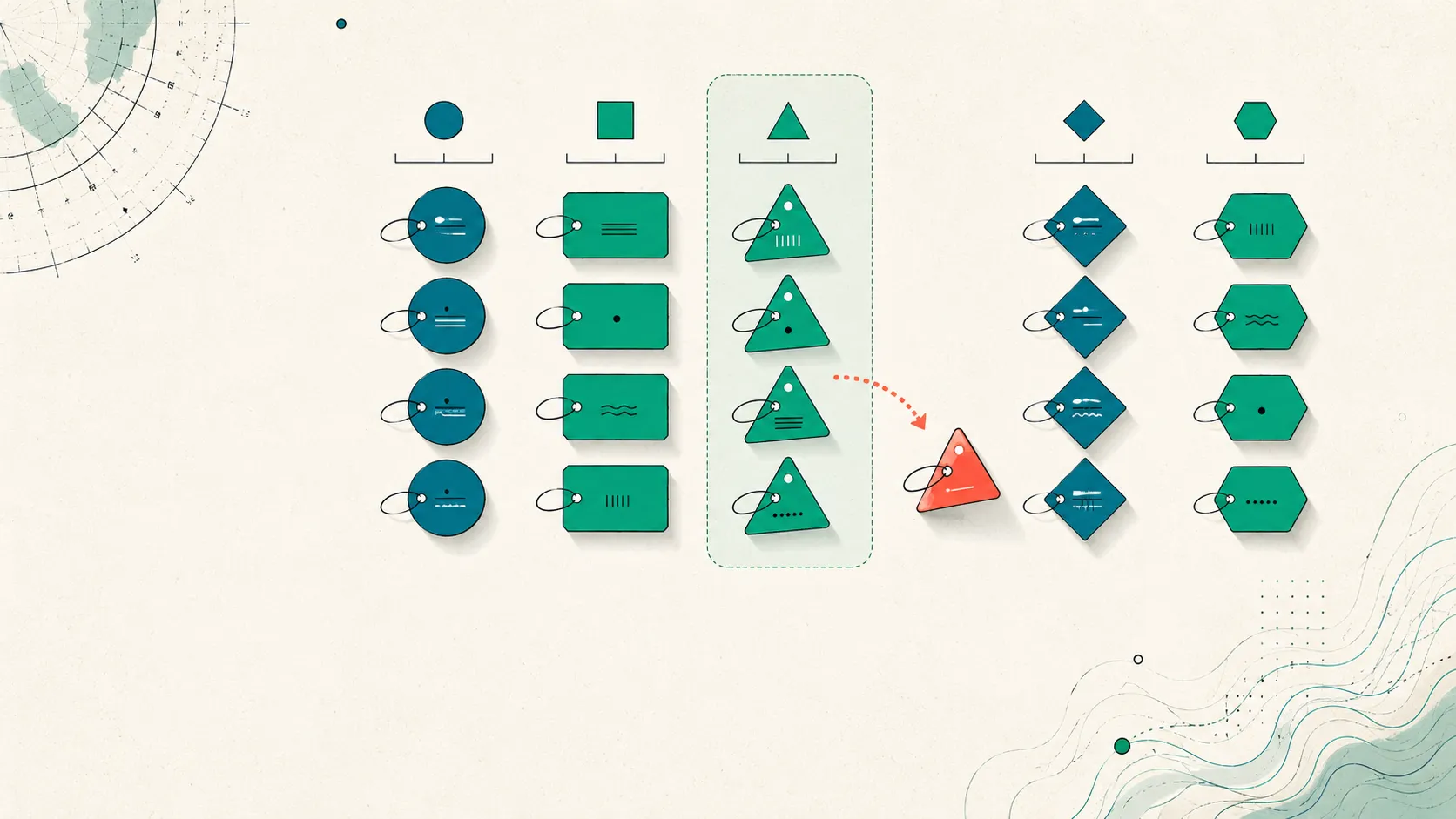
The best data annotation tools in 2026 are not one product but a market split by the job you are doing. A team labeling ten million dashcam frames, a lab coding therapy transcripts, and an ML engineer building a preference dataset for RLHF need almost nothing in common. So the useful question is not “what is the best tool,” but “best for what?”—and the honest answer is a table, not a winner.
This guide groups roughly sixteen platforms by the work they were built for: enterprise-managed labeling, computer-vision specialists, open-source self-hosted tools, LLM and RLHF data tools, and clinical or qualitative research software. Every fact here was checked against each vendor’s own current pages in July 2026. Where a tool is quote-only, the table says so rather than invent a number.
What are the best data annotation tools in 2026?
The best data annotation tools in 2026 fall into five groups: enterprise-managed platforms with a labeling workforce (Scale AI, Labelbox), computer-vision specialists (CVAT, V7, Roboflow, SuperAnnotate, Encord), open-source self-hosted tools (Label Studio, CVAT, Doccano, Argilla), LLM and RLHF data tools (Argilla, Surge AI, Prodigy), and clinical or qualitative software (NVivo, ATLAS.ti, MAXQDA, Dedoose, Tagaroo). The master table below is the fastest way to filter them.
| Tool | Best for | Open source | Pricing model | Modalities | Workforce |
|---|---|---|---|---|---|
| Scale AI | High-volume enterprise & frontier-lab data engines | No | Quote-based; self-serve pay-as-you-go tier | Image, video, text, audio, 3D, LLM | Managed + BYO |
| Labelbox | Data-centric platform + expert workforce | No (open SDK) | Free tier; ~$0.10/unit self-serve; enterprise quote | Image, video, text, DICOM, LLM | Managed + BYO |
| CVAT | Open-source computer vision | Yes (MIT) | Free self-host; cloud from ~$33/user/mo | Image, video, 3D/LiDAR | Bring your own |
| V7 Darwin | AI-assisted labeling; medical & video | No | Free tier; paid by quote | Image, video, DICOM/NIfTI, docs, text | BYO + services |
| Roboflow | End-to-end CV: annotate, train, deploy | No (large OSS ecosystem) | Free tier; Core $79/user/mo; enterprise | Image, video (CV only) | BYO + optional services |
| SuperAnnotate | Multimodal + LLM data operations | No | Quote-based (Starter/Pro/Enterprise) | Image, video, text, audio, LLM | BYO + services marketplace |
| Encord | Multimodal data layer; healthcare | No | Quote-based; self-serve Starter | Image, video, audio, docs, DICOM, 3D, LLM | Bring your own |
| Label Studio | General-purpose, all-modality self-hosting | Open core (Apache-2.0) | Free OSS; Cloud from $99/user/mo; enterprise | Image, audio, text, video, time-series, LLM | Bring your own |
| Doccano | Lightweight open-source text & NER | Yes (MIT) | Free (self-host only) | Text only | Bring your own |
| Argilla | NLP/LLM dataset curation (Hugging Face) | Yes (Apache-2.0) | Free (self-host or HF Spaces) | Text / LLM data | Bring your own |
| Prodigy | Scriptable, developer-first active learning | No | One-time license (from $390) | Text, image, audio, video | Bring your own |
| Surge AI | Premium managed RLHF human data | No | Quote-based (managed service) | Text, LLM, images | Managed workforce |
| NVivo | Deep mixed-methods qualitative analysis | No | Subscription or perpetual license | Text, PDF, audio, video, images, survey | Bring your own |
| ATLAS.ti | AI-forward qualitative analysis | No | Subscription (no public price list) | Text, PDF, images, audio, video | Bring your own |
| Dedoose | Low-commitment web-native mixed methods | No | Pay-per-active-month (from ~$13) | Text, audio, video, images, survey | Bring your own |
| Tagaroo | AI-guided clinical & research annotation with validated scales | No | Free plan; Pro ~$29/mo; Teams ~$99/mo | Text, image, audio/video (via transcription) | Bring your own (AI-assisted) |
That single table is the original artifact of this post: sixteen tools sorted by the job they are built for, so a buyer can eliminate twelve of them in one scan. The rest of this guide explains each group and links to the deeper head-to-head where one exists.
How do you choose among the best data annotation tools?
Choosing among the best data annotation tools comes down to five decisions, in roughly this order: your data modality, whether you need a managed workforce, open-source versus commercial, your domain, and your quality-assurance needs. Get the first two right and the shortlist usually writes itself.
Modality eliminates the most options fastest. Computer-vision tools (CVAT, Roboflow) do not touch text; text tools (Doccano) do not touch images; only a few (Label Studio, Scale AI, SuperAnnotate, Encord) are genuinely multimodal. Workforce is the next fork: Scale AI, Surge AI, and Labelbox will supply vetted annotators, while Label Studio, CVAT, and Prodigy are software you staff yourself.
Open-source versus commercial is a total-cost decision, not a price one. A free license still costs DevOps, security review, and QA tooling to run in production. Domain matters when your labels encode expert judgment—medical imaging, legal, or clinical constructs—where a generic tool’s ontology fights you. Finally, quality assurance: if you need inter-rater reliability, consensus, or an audit trail, check that it is built in rather than bolted on. The data work is where model quality is won or lost; Sambasivan and colleagues found that neglecting it produces compounding “data cascades” downstream (Sambasivan et al., 2021).
Enterprise-managed labeling platforms: Scale AI and Labelbox
Enterprise-managed platforms combine labeling software with an on-demand human workforce, aimed at teams that need millions of labels or specialized RLHF data without hiring annotators. Scale AI and Labelbox are the reference names, and both are quote-driven for their main business.
Scale AI is the high-volume data engine behind many frontier models, spanning image, video, text, audio, 3D/LiDAR, and GenAI data. It runs both a managed workforce (Scale Rapid) and a bring-your-own path (Scale Studio); its pricing is quote-based, with a self-serve tier that gives a first tranche of labeling units free. Labelbox pairs a self-serve platform (free up to 500 units per month, then about $0.10 per labeling unit) with an expert workforce through its Alignerr network, and supports multimodal and conversational LLM data. If your bottleneck is people rather than software, this is the category to shortlist.
Computer-vision annotation tools: CVAT, V7, Roboflow, SuperAnnotate, Encord
Computer-vision annotation tools specialize in images and video—bounding boxes, polygons, segmentation masks, keypoints, and increasingly AI-assisted auto-labeling. Five stand out, and they differ most on medical support, video, and how much of the ML pipeline they cover.
CVAT is the open-source (MIT) standard, free to self-host with AI-assisted tools like SAM, plus paid cloud tiers from around $33 per user per month. Roboflow wraps annotation, training, and deployment into one developer platform for vision only, with published prices (free tier; Core at $79/user/month) and a large open-source ecosystem around it.
V7 Darwin leans into AI-assisted labeling and medical formats (DICOM, NIfTI); its separate V7 Go product automates document workflows. SuperAnnotate and Encord are broader multimodal platforms—both quote-based—with Encord covering the widest modality range here (audio, documents, DICOM, 3D, and LLM evaluation) and a strong healthcare footprint. Medical-imaging teams should weight DICOM support and built-in consensus review heavily; a prototype rarely needs more than CVAT’s free tier. For a deeper split of these, see the dedicated computer-vision comparison in this cluster.
What are the best open-source annotation tools?
The best open-source annotation tools are Label Studio, CVAT, Doccano, and Argilla—each free to self-host under a permissive license, differing mainly by modality. Open-source here means no license fee, not zero cost: you own the infrastructure, security, and upkeep.
Label Studio (Apache-2.0, by HumanSignal) is the most popular general-purpose option, covering image, audio, text, video, time-series, and LLM data, with a paid cloud (from $99/user/month) and an enterprise edition on top. CVAT (MIT) owns open-source computer vision. Doccano (MIT) is a lightweight, no-frills tool for text classification and NER. Argilla (Apache-2.0), now part of Hugging Face, is a data-centric tool for building and curating NLP and LLM datasets, including preference data for fine-tuning.
If your team has the engineering capacity and wants full control of its data, these four are the honest first stop before any paid platform. A working rule of thumb: self-host when data control or a custom pipeline is the priority, and buy when compliance, support, or speed matters more than the license line item. That trade-off—support, compliance, and speed—is exactly what commercial tools charge for.
Annotation tools for LLMs and RLHF
Annotation tools for LLMs and RLHF handle tasks generic labelers were not built for: preference and ranking data, instruction demonstrations, red-teaming, and rubric-based evaluation. The category is young and moves fast—Humanloop, a well-known LLM-eval platform, was acqui-hired by Anthropic and its product fully sunset on September 8, 2025, a reminder to check that a tool still exists before you standardize on it.
For the tools that are current: Surge AI sells a premium managed workforce (“Surgers”) for RLHF and human-feedback data, quote-based, used by several frontier labs. Argilla covers the open-source, data-centric side—curating preference and feedback datasets. Prodigy, from the spaCy team, is a scriptable, developer-first tool with a one-time license (from $390) and tight model-in-the-loop active learning, strong when a human labeler works alongside a model.
Non-experts can rival experts on many general NLP tasks once labels are aggregated (Snow et al., 2008), but that ratio breaks down for specialized judgment—which is where a curated workforce or a domain-guided tool earns its cost. The task-by-task breakdown lives in the dedicated annotation and evaluation tools for LLMs and RLHF guide.
Clinical and qualitative annotation tools
Clinical and qualitative annotation tools are a separate market built for coding meaning in text—interviews, therapy sessions, open-ended responses—rather than drawing boxes on images. Computer-aided qualitative data analysis software (CAQDAS) is the established core, and most of it added AI features in the last two years.
NVivo (now sold by Lumivero) is the deepest mixed-methods package, offering both subscription and perpetual licensing, an AI Assistant add-on, and a Coding Comparison query that computes percentage agreement and Cohen’s kappa. ATLAS.ti (also Lumivero) is the most AI-forward, with GPT-powered “Intentional AI Coding” and inter-coder agreement via Krippendorff’s alpha. MAXQDA is the strongest true mixed-methods tool, pairing coding with a statistics module. Dedoose is web-native with a distinctive pay-per-active-month model (from about $13).
Free and open options exist too: Taguette (BSD-3, text only) and QualCoder (LGPL-3), which codes text, images, and audio/video and reports Cohen’s kappa. For the full four-way breakdown, see qualitative analysis software compared and the roundup of the best NVivo alternatives.
None of these were built specifically for clinical rating scales or multi-speaker interview transcripts, which is the gap the next section is about—and where the dedicated guide to clinical and medical transcript annotation tools goes deeper.
Where does Tagaroo fit?
Tagaroo is an AI-guided annotation workspace for clinical and research data, positioned between generic labeling platforms and traditional CAQDAS. Its differentiator is a curated Scale Library: two dozen validated clinical and language instruments—depression, thought disorder, emotion, argumentation—each with domains, severity anchors, and agent skills, so you start from a published scale instead of building a codebook from scratch.
Three things set it apart in practice. An AI agent takes the first pass—tagging what it is confident about and flagging edge cases for the expert—so a team can label its first sample in minutes with no workforce contract. Annotation is evidence-mode: to score an item on the MADRS or the PHQ-9, you tag the exact utterance that justifies the rating, which makes the score auditable rather than a black box (the MADRS scoring guide walks through this evidence-anchored approach). And inter-rater reliability is computed as coders work, so agreement is visible in the workflow rather than exported to a spreadsheet later—Landis & Koch (1977) give the benchmarks for reading those kappa values.
Be clear about where Tagaroo is not the answer. If you need a managed labeling workforce, Scale AI or Surge AI fit better. For high-volume computer vision, CVAT or Roboflow are stronger. For a mature, full-featured qualitative package with a decade of mixed-methods depth, NVivo or ATLAS.ti do more.
Tagaroo’s lane is narrower and deliberate: AI-guided, scale-based annotation of clinical transcripts and images, with reliability and evidence built in. Rating scales measure symptom severity for research; they are not a diagnosis, and no tool substitutes for a clinician’s judgment. You can browse the Scale Library or read how the numbers are checked in the guide to Cohen’s kappa and inter-rater reliability.
References
- Sambasivan, N., Kapania, S., Highfill, H., Akrong, D., Paritosh, P., & Aroyo, L. M. (2021). “Everyone wants to do the model work, not the data work”: Data cascades in high-stakes AI. CHI ’21. doi:10.1145/3411764.3445518
- Snow, R., O’Connor, B., Jurafsky, D., & Ng, A. Y. (2008). Cheap and fast—but is it good? Evaluating non-expert annotations for natural language tasks. EMNLP 2008. aclanthology.org/D08-1027
- Landis, J. R., & Koch, G. G. (1977). The measurement of observer agreement for categorical data. Biometrics, 33(1), 159–174. doi:10.2307/2529310
- Kroenke, K., Spitzer, R. L., & Williams, J. B. W. (2001). The PHQ-9: Validity of a brief depression severity measure. Journal of General Internal Medicine, 16(9), 606–613. doi:10.1046/j.1525-1497.2001.016009606.x
- Montgomery, S. A., & Åsberg, M. (1979). A new depression scale designed to be sensitive to change. British Journal of Psychiatry, 134(4), 382–389. doi:10.1192/bjp.134.4.382
Pricing and features in this comparison were verified against each vendor’s own pages in July 2026 and will drift—check the source before you buy. If your work is coding clinical or research transcripts against validated scales, Tagaroo is one of the best data annotation tools to start with because it turns a published scale into a guided, evidence-anchored workflow with inter-rater reliability built in; browse the Scale Library to try one.
Frequently asked questions
- What is the best data annotation tool?
- There is no single best data annotation tool—the right one depends on your modality, whether you need a labeling workforce, and your budget. For large-scale managed labeling, Scale AI and Labelbox lead; for open-source self-hosting, Label Studio and CVAT; for clinical and qualitative research, NVivo, ATLAS.ti, and the AI-guided Tagaroo. Match the tool to the job, not to a leaderboard.
- What are the best open-source data annotation tools?
- The leading open-source annotation tools in 2026 are Label Studio (Apache-2.0, all modalities), CVAT (MIT, computer vision), Doccano (MIT, text and NER), and Argilla (Apache-2.0, NLP and LLM data). All are free to self-host; the real cost is the DevOps, security, and QA time to run them, not a license fee.
- How much do data annotation tools cost in 2026?
- Pricing models vary widely. Open-source tools like CVAT, Label Studio, and Doccano are free to self-host. Self-serve SaaS runs roughly $79–99 per user per month (Roboflow, Label Studio Cloud) or usage-based (Labelbox bills about $0.10 per labeling unit). Enterprise platforms such as Scale AI, SuperAnnotate, and Encord are quote-based. Always verify current pricing on the vendor's own page.
- What is the difference between a labeling platform and a managed workforce?
- A labeling platform is software your own annotators use; a managed workforce also supplies the people. Scale AI, Surge AI, and Labelbox (through its Alignerr network) provide vetted human annotators as a service. Label Studio, CVAT, Prodigy, and Tagaroo are bring-your-own-annotator tools, so you or your team do the labeling.
- Which annotation tools support clinical or qualitative research?
- CAQDAS tools—NVivo, ATLAS.ti, MAXQDA, and Dedoose—are built for qualitative coding, and most now add AI-assisted coding and inter-rater reliability. Tagaroo focuses on AI-guided annotation of clinical transcripts and images against validated rating scales. Free and open-source options include Taguette (text only) and QualCoder (text, image, and audio/video).
- Do data annotation tools compute inter-rater reliability?
- Some compute it natively. NVivo and Dedoose report Cohen's kappa, ATLAS.ti uses Krippendorff's alpha, and MAXQDA and QualCoder also report coder agreement. Most ML-focused platforms leave inter-rater reliability to you. Tagaroo computes it as coders work; Landis & Koch (1977) give the standard kappa interpretation benchmarks.
Tagaroo builds an annotation tool, so we appear in some comparisons ourselves. How we evaluate tools is documented in our editorial policy.
Keep reading
 Tools & Comparisons
Clinical Transcript Annotation Tools: A Buyer's Shortlist
Which clinical transcript annotation tool fits psychiatric, therapy, or SLP research? Compare options on HIPAA, speaker roles, severity scales, and IRR.
 Tools & Comparisons
Qualitative Data Analysis Software Comparison (2026)
A fair, four-way qualitative data analysis software comparison of NVivo, ATLAS.ti, MAXQDA and Dedoose: pricing, AI coding and built-in IRR, side by side.
 Tools & Comparisons
The Best NVivo Alternatives for Qualitative Research 2026
Looking for an NVivo alternative? Compare the best free, modern, and AI-guided qualitative coding tools by price, platform, and clinical fit.
Put this into practice
Tagaroo turns any rating scale or coding scheme into a guided annotation workflow—with inter-rater reliability computed as you go.