Young Mania Rating Scale (YMRS): Rating Mania from Speech
The Young Mania Rating Scale (YMRS) explained: its 11 items, the four double-weighted items, severity bands, and how to rate mania from interview speech.
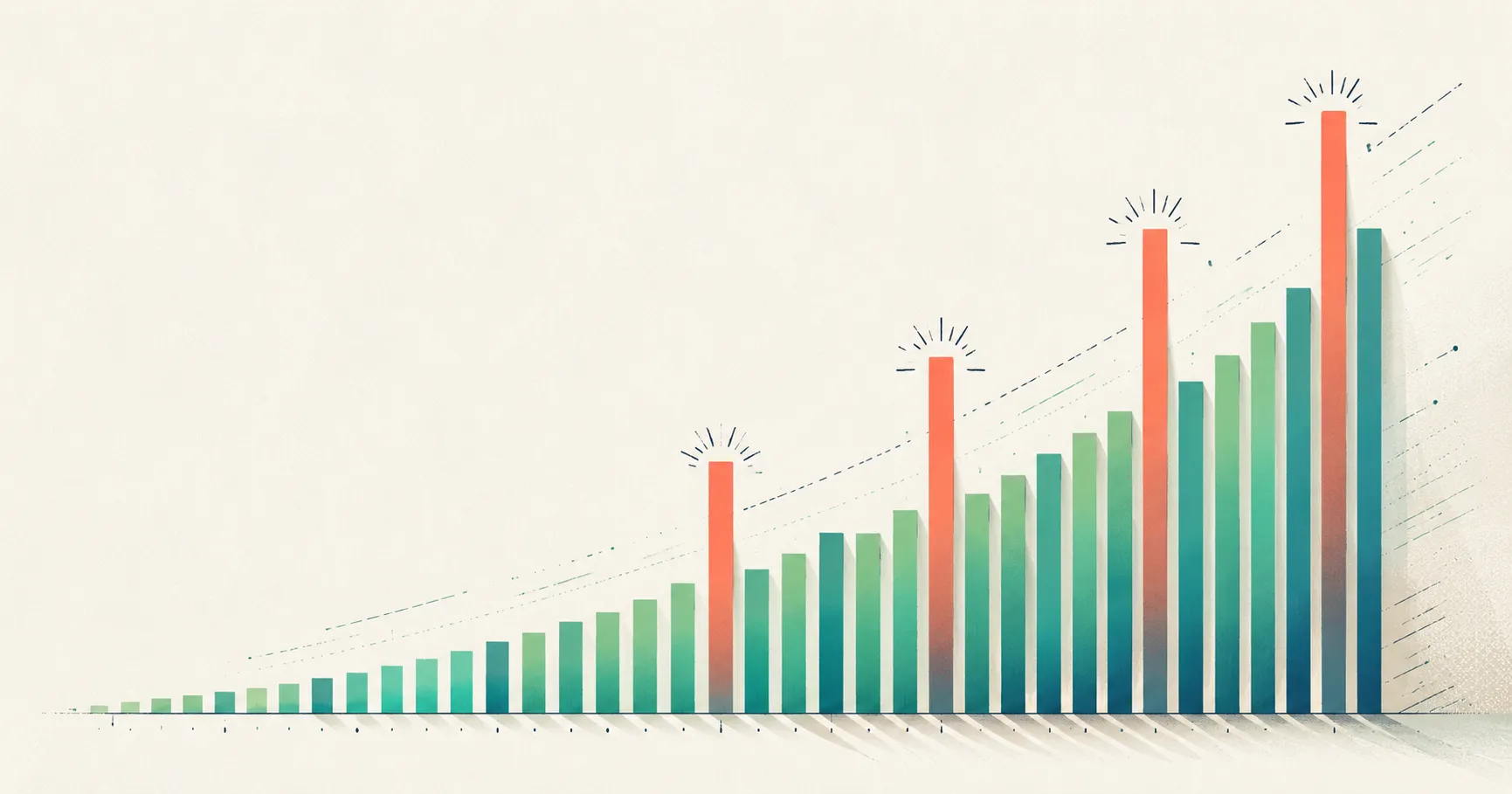
The Young Mania Rating Scale (YMRS) is the field’s default clinician-rated measure of manic symptom severity: eleven items, rated from an interview, that sum to a total between 0 and 60 (Young, Biggs, Ziegler & Meyer, 1978). What trips people up is that four of those eleven items count double—so a large share of any score can come from just four questions. Get that quirk and the rest of the scale reads cleanly. The original instrument was reliable enough that two independent clinicians’ totals correlated at 0.93 (Young et al., 1978), and it has been the standard mania-trial outcome ever since.
What is the Young Mania Rating Scale?
The Young Mania Rating Scale (YMRS) is an eleven-item, clinician-rated instrument that measures the severity of manic symptoms, scored from a clinical interview covering roughly the previous 48 hours (Young, Biggs, Ziegler & Meyer, 1978). It is a severity meter: it assumes mania is present and asks how bad it is, rather than screening for whether mania exists at all.
Young and colleagues modeled the scale on the Hamilton Rating Scale for Depression, so if you know the Hamilton Depression Rating Scale (HAM-D), the YMRS will feel familiar—same interview format, same anchored severity ratings, opposite pole of mood. The rating combines the subject’s own report with the clinician’s observations during the interview, which is why it is clinician-rated rather than self-report like the PHQ-9 or GAD-7.
Two features make it the workhorse of mania research. It was sensitive to change—it distinguished patients before and after two weeks of treatment in the original validation (Young et al., 1978)—and it was reliable, with an inter-rater correlation of 0.93 on the total score. Independent validations have since reproduced that reliability: a Portuguese-language study of 55 manic patients reported an intra-class correlation of 0.97 for the total score (Vilela, Crippa, Del-Ben & Loureiro, 2005). Those properties are exactly what a treatment trial needs, which is why nearly every acute-mania study since has used the YMRS as its primary outcome.
How does the Young Mania Rating Scale score mania?
YMRS scoring sums eleven item ratings into a single total from 0 to 60. Seven items are rated on a 0–4 scale; the remaining four are rated 0–8. There is no reverse-scoring and no subscales in the standard total—every point is simply added.
Work a concrete (synthetic) example. Imagine a subject rated: elevated mood 3, activity/energy 2, sexual interest 1, sleep 3, irritability 4, speech 4, language–thought disorder 2, thought content 4, disruptive behaviour 2, appearance 0, insight 1. That sums to 26—moderate mania, and close to the mean baseline YMRS score of 26.4 (±9.9) recorded across the 3,459-patient EMBLEM cohort (Lukasiewicz et al., 2013). Notice that the four double-weighted items alone (irritability, speech, thought content, disruptive behaviour) contributed 14 of those 26 points.
The simulator below runs that arithmetic live. Rate each item and watch two numbers move: the total, and the “double-weighted subtotal”—the share coming from just four items.
YMRS score simulator
Rate the subject’s presentation on each item. Seven items run 0–4; the four×2double-weighted items run 0–8. The total ranges 0–60.
- 1.Elevated mood
- 2.Increased motor activity–energy
- 3.Sexual interest
- 4.Sleep (reduced need for sleep)
- 5.Irritability×2
- 6.Speech (rate and amount)×2
- 7.Language–thought disorder
- 8.Thought content×2
- 9.Disruptive–aggressive behaviour×2
- 10.Appearance
- 11.Insight
Total score
0 / 60
Severity band
Minimal / not manic
Double-weighted subtotal
0 / 32
Severity labels use the approximate CGI-S equivalents from Samara, Levine & Leucht (2022); the double-weighting follows Young, Biggs, Ziegler & Meyer (1978). This tool illustrates how the YMRS is scored; it is an educational aid, not a diagnostic instrument, and a score is a severity measure, not a diagnosis. Adjust the items above (or load the example) to see the score update.
The four double-weighted items are flagged with a ×2 badge. That is not a display trick; it reflects how the scale is actually scored, and it is the single most important thing to understand about the YMRS. The next section is why.
Why are four YMRS items double-weighted?
Four YMRS items—irritability, speech (rate and amount), thought content, and disruptive/aggressive behaviour—are scored 0–8 instead of 0–4, giving them twice the weight of the other seven. Young and colleagues did this deliberately: the sickest, most acutely manic patients are the hardest to interview, so the scale leans on the symptoms that stay observable even when cooperation collapses (Young et al., 1978).
This is the opposite design choice from equal-weight scales like the PHQ-9, where every item counts the same. Neither is wrong—but you cannot compare a YMRS total to an intuition built on equal-weight scales without accounting for the weighting.
What are the 11 items on the YMRS?
The eleven YMRS items each capture one feature of a manic presentation, from mood and energy through to insight. Four carry double weight (marked below); one—appearance—is rated from visual observation rather than from what the person says.
| # | YMRS item | Weight | What it captures |
|---|---|---|---|
| 1 | Elevated mood | 0–4 | Expansive, euphoric, or inappropriately cheerful mood |
| 2 | Increased motor activity–energy | 0–4 | Restlessness, heightened drive, excessive activity |
| 3 | Sexual interest | 0–4 | Heightened sexual interest or disinhibited sexual talk |
| 4 | Sleep | 0–4 | Reduced need for sleep with sustained energy |
| 5 | Irritability | 0–8 ×2 | Irritable, touchy, hostile; short-tempered, easily provoked |
| 6 | Speech (rate and amount) | 0–8 ×2 | Increased rate and volume; pressured, hard to interrupt |
| 7 | Language–thought disorder | 0–4 | Tangential, circumstantial, flight-of-ideas; distractible |
| 8 | Thought content | 0–8 ×2 | Grandiose or paranoid ideas, from over-valued plans to delusions |
| 9 | Disruptive–aggressive behaviour | 0–8 ×2 | Hostility, threats, uncooperativeness, provocative behaviour |
| 10 | Appearance | 0–4 | Grooming and dress—rated by observation, not speech |
| 11 | Insight | 0–4 | Awareness of being ill or of the abnormality of one's behaviour |
That single visual item matters for anyone coding the YMRS from a transcript. You can hear pressured speech and flight of ideas; you cannot hear grooming. It is the one item the scale asks you to read off the person’s presentation rather than their words—a distinction that becomes concrete later.
What do YMRS scores mean? Severity bands and cutoffs
YMRS interpretation is trickier than it looks, because Young et al. never published fixed severity bands the way the PHQ-9 does. The numbers acquired meaning later, by anchoring YMRS totals to clinicians’ global impressions. The most useful mapping comes from an equipercentile linkage across eight mania trials (N = 2,988), which lined up YMRS totals with the Clinical Global Impression – Severity scale (Samara, Levine & Leucht, 2022).
| YMRS total (approx.) | CGI-S equivalent | Reading |
|---|---|---|
| ≤ 5 | Not / borderline ill | Minimal or no manic symptoms |
| ~6 | Borderline mentally ill | Questionable mania |
| ~12 | Mildly ill | Mild mania; common remission ceiling in trials |
| ~20 | Moderately ill | Typical RCT entry threshold |
| ~30 | Markedly ill | At/above the ≥25 'markedly ill' threshold |
| ~40 | Severely ill | Severe mania |
| ~52 | Among the most extremely ill | Extreme mania |
Two cutoffs recur in practice. Trials usually require a YMRS around 20 to enrol a patient, and remission is commonly set at ≤12. The sharpest single number comes from the EMBLEM cohort: a threshold of ≥25 identified patients who were at least “markedly ill” with a positive predictive value of 83% (Lukasiewicz et al., 2013).
The same study answers a question every longitudinal user eventually asks: how much change is meaningful? The minimal clinically significant difference was 6.6 YMRS points—roughly one point of clinician-rated global change (Lukasiewicz et al., 2013). A three-point drop is inside the noise; a seven-point drop is a real move. Treat any single cutoff as a convention tied to a purpose—enrolment, remission, or “clearly ill”—not as a natural boundary.
Is a YMRS score a diagnosis?
No—the YMRS is a severity and change measure, and a total is a description of how manic someone is, not a verdict on what they have. A diagnosis of bipolar disorder rests on a clinical assessment against DSM or ICD criteria, including history and course; a scale total cannot carry that weight on its own.
The distinction has teeth in practice. A YMRS of 28 tells you a presentation is moderately-to-markedly manic right now; it says nothing about whether this is bipolar I, a substance-induced state, or an agitated presentation of something else. The scale is built to quantify and track a syndrome, which it does well—the misuse is treating the number as the answer rather than as one structured input to a clinician’s judgment.
How do you rate the YMRS from an interview transcript?
To rate the YMRS from a transcript, you attach each item’s score to the actual evidence for it in the subject’s speech—instead of ticking a form from memory. This is the workflow Tagaroo is built for, and it produces an auditable rating: every item points to the words that justify it. It also fits the YMRS unusually well, because some of its items are about speech.
Most YMRS items are what Tagaroo calls evidence-mode: you highlight the passage that supports a rating of elevated mood, grandiosity, or reduced sleep. But two items—speech (rate and amount) and language–thought disorder—are not about content at all. They are about the form of the talk itself: how fast, how pressured, how tangential. Those are instance-mode items—you mark the specific utterances that display the phenomenon, which is exactly what span tagging captures.
Consider a short synthetic exchange:
Interviewer: How have you been sleeping this week?
Subject: Sleep? I don’t need it—three hours and I’m firing, I’ve got the whole app mapped out, and the domain, and I called my brother at 4 a.m. because honestly he needs to hear this, it’s going to change everything, are you writing this down?
You would tag the reduced-sleep report as evidence for sleep, the “change everything” plan for thought content (grandiosity), and the run-on, unstoppable delivery itself as an instance of speech (rate and amount) and language–thought disorder. The words do double duty: their meaning feeds one item, their form feeds another. Coding on the span makes the rating reproducible enough to compute agreement across coders—which is its own discipline, covered in our guide to Cohen’s kappa and inter-rater reliability.
One honest wrinkle: of the eleven YMRS items, the YMRS in Tagaroo exposes the ten that live in language and report, and leaves out appearance—because you cannot tag grooming from a transcript. It is the one item that needs the room, not the recording.
On data handling: transcript coding means working with sensitive clinical language, so the sane default is de-identified text and a privacy-first setup. Tagaroo supports a browser-side anonymous mode so transcript content can stay local rather than being uploaded—worth checking against your ethics approval before any real interview data touches a tool.
How does the YMRS compare to the HAM-D and BPRS?
As a mania rating scale, the YMRS occupies a narrow, deliberate niche: it measures one syndrome—mania—in depth, which sets it apart from its depression counterpart (the HAM-D) and from broad-spectrum instruments (the BPRS). All three are clinician-rated interview scales; they differ in what they cover and how they weight it.
| Scale | Measures | Items | Weighting | Rater | Best for |
|---|---|---|---|---|---|
| YMRS | Manic symptom severity | 11 | 4 items double-weighted (0–8) | Clinician interview | Rating and tracking mania severity in trials |
| HAM-D | Depressive symptom severity | 17 | No double-weighting; item maxima vary (0–2 or 0–4) | Clinician interview | Rating and tracking depression severity |
| BPRS | Broad psychopathology—psychosis, mood, anxiety, hostility | 16–18 | Equal weight; each item scored 1–7 | Clinician interview / observation | A general symptom profile across diagnoses |
Two contrasts matter most. The Hamilton Depression Rating Scale (HAM-D) is the YMRS’s mirror image—same clinician-interview format, opposite pole of mood—so bipolar studies often run the two together, since a single “bipolar rating scale” spanning mania and depression is not in standard use. The Brief Psychiatric Rating Scale (BPRS) casts a far wider net with no special focus on mania, yet the two track each other where they overlap: total scores correlated at r = 0.78 in one validation sample (Vilela et al., 2005). Use the YMRS when mania severity is the question, and reach for the BPRS when you need a general symptom profile.
Common YMRS scoring mistakes
Most YMRS scoring mistakes trace back to the scale’s design, and rating inconsistency is common enough to have been measured: across 63,228 YMRS administrations from 14 bipolar trials, 31% carried at least one logical-consistency or statistical-outlier flag (Rabinowitz et al., 2024). Four errors recur.
- Reading the total as equal-weighted. A “20” driven by irritability and aggression is a different clinical picture from a “20” driven by mood, energy, and sleep. Read the item profile.
- Rating the interviewer’s prompts. Score only the subject’s presentation. In a transcript, it is easy to let a leading question colour the rating—tag the subject’s words.
- Over-reading small changes. With a minimal clinically significant difference around 6.6 points (Lukasiewicz et al., 2013), a two- or three-point shift is measurement noise, not improvement.
- Treating a cutoff as a diagnosis. A total at or above 25 says “markedly ill,” not “has bipolar disorder.” The number describes severity; the diagnosis is a separate clinical judgment.
The practical upshot: the Young Mania Rating Scale is easy to add up and easy to misread. Respect the double weighting, read the item profile behind the total, and treat every cutoff as a convention tied to a purpose—and the number becomes an interpretation you can defend rather than a black box.
References
- Young, R. C., Biggs, J. T., Ziegler, V. E., & Meyer, D. A. (1978). A rating scale for mania: reliability, validity and sensitivity. British Journal of Psychiatry, 133, 429–435. doi:10.1192/bjp.133.5.429
- Overall, J. E., & Gorham, D. R. (1962). The Brief Psychiatric Rating Scale. Psychological Reports, 10(3), 799–812. doi:10.2466/pr0.1962.10.3.799
- Vilela, J. A. A., Crippa, J. A. S., Del-Ben, C. M., & Loureiro, S. R. (2005). Reliability and validity of a Portuguese version of the Young Mania Rating Scale. Brazilian Journal of Medical and Biological Research, 38(9), 1429–1439. doi:10.1590/S0100-879X2005000900019
- Lukasiewicz, M., Gerard, S., Besnard, A., Falissard, B., Perrin, E., Sapin, H., Tohen, M., Reed, C., & Azorin, J.-M. (2013). Young Mania Rating Scale: how to interpret the numbers? Determination of a severity threshold and of the minimal clinically significant difference in the EMBLEM cohort. International Journal of Methods in Psychiatric Research, 22(1), 46–58. doi:10.1002/mpr.1379
- Samara, M. T., Levine, S. Z., & Leucht, S. (2022). Linkage of Young Mania Rating Scale to Clinical Global Impression Scale to enhance utility in clinical practice and research trials. Pharmacopsychiatry, 55(6), 301–308. doi:10.1055/a-1841-6672
- Rabinowitz, J., Young, R. C., Yavorsky, C., Williams, J. B. W., Sedway, J., Marino, P., Mahableshwarkar, A. R., Kott, A., & Brady, C. (2024). Consistency checks to improve measurement with the Young Mania Rating Scale (YMRS). Journal of Affective Disorders, 345, 24–31. doi:10.1016/j.jad.2023.10.098
If you rate mania from interviews or track YMRS change over time, Tagaroo turns the Young Mania Rating Scale into a guided, evidence-anchored annotation workflow—with inter-rater reliability computed as your coders work.
Frequently asked questions
- What is the Young Mania Rating Scale used for?
- The Young Mania Rating Scale (YMRS) measures the severity of manic symptoms and tracks how they change over time. It is the most widely used clinician-rated outcome in acute-mania treatment trials (Young, Biggs, Ziegler & Meyer, 1978). It rates how manic someone is right now—it does not establish whether a person has bipolar disorder, which rests on a clinical assessment against diagnostic criteria.
- How is the YMRS scored?
- The YMRS has 11 items rated from a clinical interview. Seven items are scored 0–4 and four items—irritability, speech, thought content, and disruptive/aggressive behaviour—are scored 0–8, so they carry double weight. The item ratings sum to a total between 0 and 60 (Young et al., 1978). There is no reverse-scoring; every point is added.
- What is a high YMRS score, or the YMRS cutoff for mania?
- There is no single official cutoff. Mania trials typically require a YMRS of about 20 to enter, and remission is often defined as ≤12. In the EMBLEM cohort of 3,459 patients, a threshold of ≥25 identified 'markedly ill or worse' patients with a positive predictive value of 83% (Lukasiewicz et al., 2013). Scores of roughly 20, 30, and 40 map to 'moderately,' 'markedly,' and 'severely' ill (Samara, Levine & Leucht, 2022).
- Why are four YMRS items double-weighted?
- Young and colleagues gave irritability, speech, thought content, and disruptive/aggressive behaviour twice the weight of the other seven items to compensate for the poor cooperation typical of severely ill patients—the sickest people are hardest to interview, so the items that stay observable count more (Young et al., 1978). The practical effect: those four items can supply up to 32 of the 60 possible points.
- How is the YMRS different from a depression scale like the HAM-D?
- Both are clinician-rated interview scales, and the YMRS deliberately follows the HAM-D's format, but they measure opposite poles. The YMRS rates manic symptoms (elevated mood, pressured speech, grandiosity); the HAM-D rates depressive symptoms. The YMRS is also unusual in weighting four of its items double, whereas most depression scales weight every item equally.
Keep reading
 Rating Scales
Auditable Clinical Ratings: Score From the Transcript
Build an auditable clinical rating by tying every scale item to a quoted line, not a global impression. See how span-grounded scoring works.
 Rating Scales
BPRS vs PANSS: The Two Standard Psychosis Rating Scales
BPRS vs PANSS compared: item overlap, the positive-negative-general structure, trial usage, and score linking. See which psychosis scale to use.
 Rating Scales
Depression Rating Scales Compared: HAM-D, MADRS, PHQ-9
Depression rating scales compared: HAM-D, MADRS, PHQ-9, and content analysis by rater, item count, and change-sensitivity. See which fits your study.
Put this into practice
Tagaroo turns any rating scale or coding scheme into a guided annotation workflow—with inter-rater reliability computed as you go.