VR-CoDES Coding System: Cues, Concerns, and Responses
How the VR-CoDES coding system codes patient emotional cues versus concerns and the provider response, using the providing-space vs reducing-space axis.
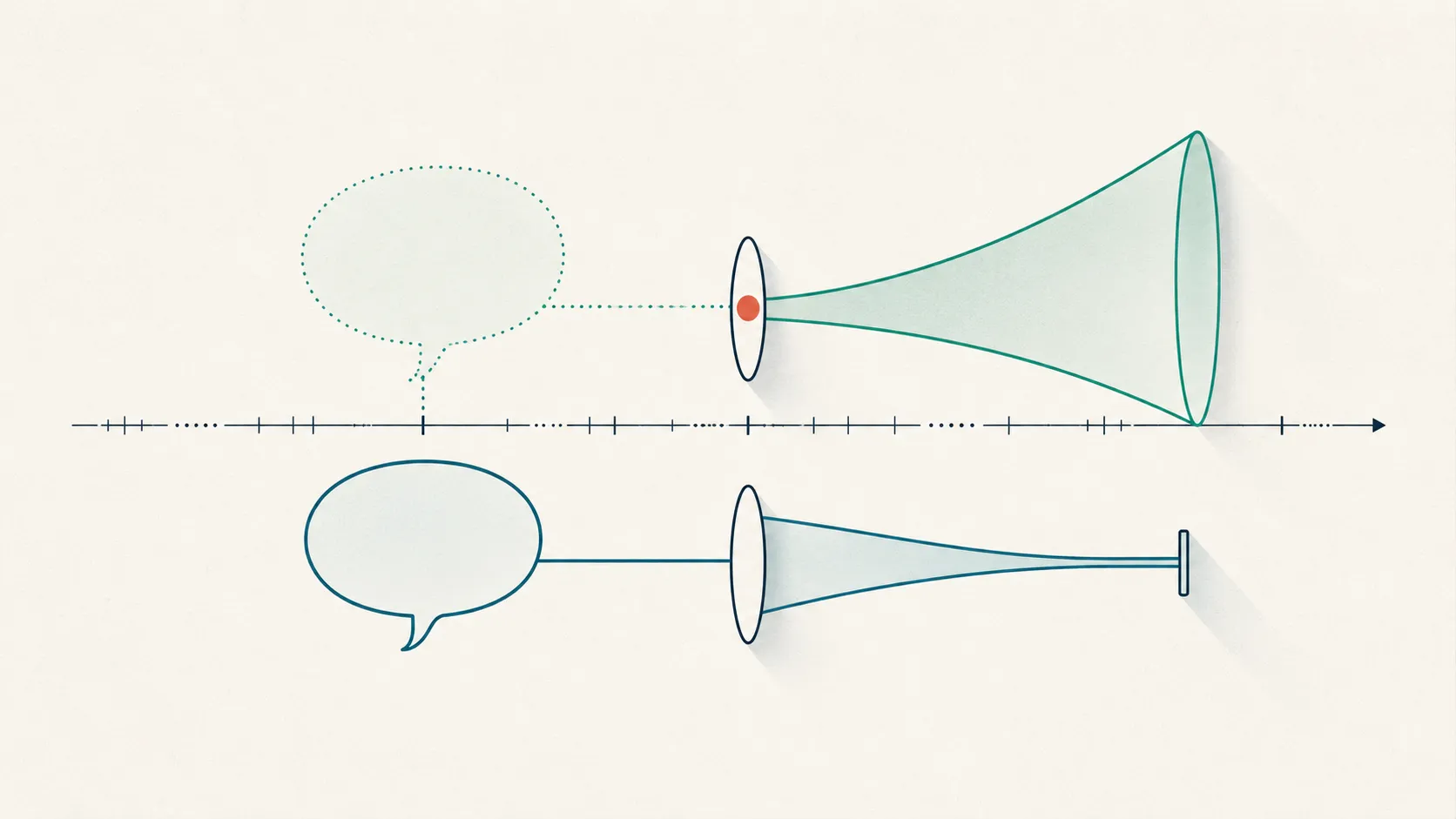
A patient says, “I suppose I’ll just have to get on with it.” Is that an emotion worth coding, or just a turn of phrase? The VR-CoDES coding system—the Verona Coding Definitions of Emotional Sequences—exists to answer exactly that, and to answer it the same way twice. It is a consensus method for coding the emotional sequences of a clinical consultation: the moments a patient signals distress, and what the clinician does next (Zimmermann et al., 2011; Del Piccolo et al., 2011).
Its defining move is a distinction that sounds obvious until you try to code it: the difference between a cue and a concern. Get that boundary right and the rest of the system follows. Get it wrong and two coders will disagree on half your data.
What is the VR-CoDES coding system?
The VR-CoDES coding system is a consensus method for coding how patients express emotional distress in a medical consultation and how providers respond to it (Zimmermann et al., 2011; Del Piccolo et al., 2011). It was built by the Verona Network on Sequence Analysis, an international group of communication researchers, through a consensus process that ran from 2004 to 2007 and ended with a coder training package (Zimmermann et al., 2011).
It comes as two linked manuals. VR-CoDES-CC codes the patient’s expressions—the cues and concerns. VR-CoDES-P codes the health provider’s response to each cue or concern. Because the two are designed to interlock, the real object of study is the sequence: a patient signal followed by a provider move (Del Piccolo et al., 2017).
That sequence framing is the point. Emotion in a consultation is not a static level to be measured once; it is a back-and-forth that either opens up or shuts down, turn by turn.
Cue vs concern: what is the difference?
A cue is a hint; a concern is a statement. More precisely, a cue is a verbal or non-verbal hint that suggests an underlying unpleasant emotion but lacks clarity, while a concern is a clear and unambiguous expression of an unpleasant current or recent emotion that is explicitly verbalized (Zimmermann et al., 2011). The deciding test is explicitness, not intensity: a quietly stated “I’m scared” is a concern, and a dramatic sigh is a cue.
| Feature | Cue | Concern |
|---|---|---|
| Definition | A hint suggesting an unpleasant emotion that lacks clarity | A clear, explicit verbalization of an unpleasant emotion |
| Explicitness | Implicit, vague, or ambiguous | Explicit and unambiguous |
| Channel | Verbal or non-verbal (a sigh, a pause, a loaded word) | Always verbal |
| Time frame | Irrelevant (vague by definition) | Current or recent |
| Coder's job | Notice the signal and mark it for exploration | Record the stated emotion |
The manual defines seven cue subtypes (a through g), covering everything from vague emotion words to verbal hints such as unusual phrasing, metaphors, or expressions of uncertainty and hope, through to non-verbal signals (Zimmermann et al., 2011). A concern, by contrast, is a single category: the emotion is on the table.
Two further wrinkles trip up new coders. First, the time frame matters only for concerns, which must be current or recent; a cue’s time frame is irrelevant because it is vague by definition. Second, both cues and concerns can be patient-elicited or health-provider-elicited, depending on whether the provider’s previous question or statement prompted the expression (Zimmermann et al., 2011). A worried “yes” to “Are you anxious about the operation?” is provider-elicited; the same worry offered unprompted is patient-elicited.
Consider a short synthetic exchange:
Patient: The doctor mentioned it might be more serious this time. [pause] It’s just… a lot. [cue: vague words hinting at an unnamed emotion]
Patient: Honestly, I’m frightened it’s the same thing my sister had. [concern: explicit, current emotion, plainly verbalized]
The first turn is a cue because the emotion is only gestured at; the second is a concern because the patient names the fear outright. Coding them differently is not pedantry. A cue is an invitation the clinician can take up or miss, and the whole value of the scheme lies in tracking what happens next.
How does VR-CoDES-P code the provider’s response?
VR-CoDES-P codes each provider response on two independent axes: whether the response explicitly refers to the cue or concern, and whether it provides space or reduces space for further disclosure (Del Piccolo et al., 2011). The two axes are orthogonal, so there is no fixed order in which you code them. Crossing them gives four main classes, which the manual subdivides into 17 individual categories.
Providing space is any response that actively or passively invites the patient to say more about the emotion. Reducing space is any response that closes it down: ignoring the cue, an uninviting silence, switching the topic, postponing, actively blocking, or giving information, advice, or reassurance (Del Piccolo et al., 2011).
| Reducing space | Providing space | |
|---|---|---|
| Non-explicit | Ignoring the cue; an uninviting silence; a brisk 'Don't be silly'; a generic 'It'll be fine' | An attentive silence or a minimal 'mm' that invites the patient to continue |
| Explicit | Naming the concern but switching, postponing, giving advice, or actively blocking it | Naming the concern and inviting the patient to say more about it |
Here is the counterintuitive part. Giving information, advice, or reassurance is coded as reducing space, even when it is exactly what the patient needs, because it does not invite the patient to say more about the emotion (Del Piccolo et al., 2011). The system is descriptive, not evaluative. Providing space is not automatically the “correct” response, and reducing space is not a mistake; a surgeon who answers a factual worry with a clear fact may be serving the patient well. VR-CoDES records what the response did, not whether it was good.
Take the same fear from earlier and vary the reply:
Patient: I’m frightened it’s the same thing my sister had. [concern]
Clinician A: Try not to worry, these scans are routine. [explicit, reducing space: names nothing to explore, offers reassurance]
Clinician B: You’re thinking about your sister. Tell me what’s on your mind. [explicit, providing space: names the concern and invites more]
Both replies are reasonable clinical behavior. Only one opens the emotional sequence for further disclosure, and VR-CoDES-P is built to tell them apart reliably.
How reliable is VR-CoDES coding?
Reliability is good with trained coders, and it is markedly higher for provider responses than for the cue-versus-concern call. In the consensus studies, both conducted on psychiatric consultations, coding patient cues and concerns reached 81.5% agreement and Cohen’s kappa 0.70, while coding provider responses reached 92.86% agreement and Cohen’s kappa 0.90 (Zimmermann et al., 2011; Del Piccolo et al., 2011).
The gap is instructive. Deciding whether a patient turn is a vague cue or an explicit concern is a genuine judgment call, so a kappa of 0.70 is honest, not disappointing. Once a cue or concern is fixed, sorting the provider’s reply onto two clear axes is more mechanical, which is why agreement climbs.
Both figures come from trained raters using the published manuals; treat inter-rater reliability as something to establish on your own material, not to assume. Because the categories are nominal, report an agreement coefficient rather than raw percentages—the Cohen’s kappa and inter-rater reliability guide walks through why. And where coders split on cue versus concern, that split is often worth reading rather than erasing, a point we make in disagreement is signal, not noise.
A separate validation study checked whether the cues and concerns coders identify line up with what patients themselves flag as emotionally important, using video and interviews (Eide et al., 2011). And the scheme has been applied well beyond adult medicine, including pediatric consultations (Vatne et al., 2010), which is part of why it has become a shared language for emotion coding in medical-consultation research.
How do you code a transcript with VR-CoDES?
Coding runs patient-side first, then provider-side, one sequence at a time. The workflow is instance-based annotation applied to paired turns:
- Segment the consultation into units. On the patient side, an identified cue or concern defines the unit of analysis (Zimmermann et al., 2011).
- Tag each patient expression as a cue or a concern, and mark whether it was patient-elicited or provider-elicited.
- Code the provider’s next turn on both VR-CoDES-P axes: explicit or non-explicit, and providing or reducing space (Del Piccolo et al., 2011).
- Read the sequence. The cue-then-response pair is the finding, not either code alone.
A worked synthetic fragment, coded end to end:
Patient: These headaches, they’re back, and… [trails off] I don’t like what that might mean. [cue, patient-elicited: a verbal hint, emotion unnamed]
Clinician: What is it you’re afraid it might mean? [explicit, providing space: names the implied fear and invites elaboration]
Patient: That the tumor’s growing again. I’m terrified. [concern, provider-elicited: explicit, current emotion]
Anchoring every code to the exact words is what lets a second coder check the call, and it is what makes a clear coding manual non-negotiable; our notes on annotation guidelines that actually work apply directly here. This turn-by-turn logic will feel familiar to anyone who has worked with sequence schemes for talk, from the IRF/IRE structure in classroom discourse to coding change talk and sustain talk in motivational interviewing: the meaning lives in the pair, not the single utterance.
On data handling: consultation transcripts are sensitive clinical records, so de-identified text and a privacy-first setup are the sane defaults. Tagaroo supports a browser-side anonymous mode so transcript content can stay local rather than being uploaded, which is worth checking against your ethics approval before any real encounter data touches a tool.
How is VR-CoDES different from a rating scale?
VR-CoDES categorizes events and sequences; a rating scale scores intensity. That is the core difference, and it decides when each is the right instrument. A clinician-rated severity scale such as the MADRS depression scale sums item ratings into a single number that tracks how severe a condition is and how it changes. VR-CoDES produces nothing like that total. It tells you which emotional signals appeared and how they were handled, one sequence at a time.
It also differs from its closest cousin. The Empathic Communication Coding System shares the two-step patient-then-provider logic but grades the provider’s reply on a single 0–6 empathy ladder, whereas VR-CoDES splits the response onto two independent axes and refuses to rank the results as more or less empathic. Even a symptom-focused coding instrument like the Thought and Language Communication scale works differently again: it rates features of a patient’s speech for disorder, not the emotional give-and-take between two speakers. Pick the instrument for the question. If you want severity, use a scale; if you want to know whether emotional openings were taken, use a coding scheme like VR-CoDES.
Common mistakes when coding VR-CoDES
The recurring errors come from importing rating-scale habits into a coding scheme:
- Treating advice as providing space. Information, advice, and reassurance reduce space by definition, however helpful they are (Del Piccolo et al., 2011). Code the function, not the intention.
- Reading providing space as the “good” score. The system is descriptive; reducing space is often appropriate. Do not turn a category count into a report card.
- Coding a cue’s time frame. Time frame constrains concerns, not cues, which are vague by definition (Zimmermann et al., 2011).
- Confusing intensity with explicitness. A calm, plainly stated emotion is a concern; a dramatic but unnamed one is a cue. The test is clarity of verbalization, not volume.
- Using raw percent agreement. These are nominal categories, so report kappa or another chance-corrected coefficient, not a bare percentage.
The practical upshot: the VR-CoDES coding system works because it turned an amorphous thing—emotion in a consultation—into two crisp questions asked in order. Did the patient hint or state it, and did the clinician open the door or close it? Tag the cue or concern, code the response on its two axes, and let the sequence carry the finding.
References
- Zimmermann, C., Del Piccolo, L., Bensing, J., et al. (2011). Coding patient emotional cues and concerns in medical consultations: The Verona coding definitions of emotional sequences (VR-CoDES). Patient Education and Counseling, 82(2), 141–148. doi:10.1016/j.pec.2010.03.017
- Del Piccolo, L., de Haes, H., Heaven, C., et al. (2011). Development of the Verona coding definitions of emotional sequences to code health providers’ responses (VR-CoDES-P) to patient cues and concerns. Patient Education and Counseling, 82(2), 149–155. doi:10.1016/j.pec.2010.02.024
- Del Piccolo, L., Finset, A., Mellblom, A. V., et al. (2017). Verona Coding Definitions of Emotional Sequences (VR-CoDES): Conceptual framework and future directions. Patient Education and Counseling, 100(12), 2303–2311. doi:10.1016/j.pec.2017.06.026
- Eide, H., et al. (2011). Patient validation of cues and concerns identified according to Verona coding definitions of emotional sequences (VR-CoDES): A video- and interview-based approach. Patient Education and Counseling, 82(2), 156–162. doi:10.1016/j.pec.2010.04.036
- Vatne, T. M., et al. (2010). Application of the Verona Coding Definitions of Emotional Sequences (VR-CoDES) on a pediatric data set. Patient Education and Counseling, 80(3), 399–404. doi:10.1016/j.pec.2010.06.026
Educational content, not clinical or communication-skills advice. Tagaroo builds annotation software and has a commercial interest in transcript-coding workflows; citations above point to the primary VR-CoDES literature so you can verify every claim.
Frequently asked questions
- What is the difference between a cue and a concern in VR-CoDES?
- A cue is a verbal or non-verbal hint that suggests an underlying unpleasant emotion but lacks clarity; a concern is a clear, explicit verbalization of an unpleasant current or recent emotion (Zimmermann et al., 2011). The practical test is explicitness: if the patient names the feeling plainly ('I'm frightened about the results'), it is a concern; if the emotion is only implied, vague, or non-verbal ('I don't know how I'll manage'), it is a cue. A concern is always verbalized, whereas a cue can be non-verbal.
- What does providing space versus reducing space mean in VR-CoDES?
- It is one of the two axes VR-CoDES-P uses to code a provider's reply to a cue or concern (Del Piccolo et al., 2011). Providing space is any response that actively or passively invites the patient to say more about the emotion; reducing space is any response that closes it down, such as ignoring, switching topic, postponing, actively blocking, or giving information, advice, or reassurance. Crucially, giving advice counts as reducing space even when it is helpful.
- Is VR-CoDES a rating scale?
- No. VR-CoDES is an observational coding scheme, not a severity rating scale (Zimmermann et al., 2011). It classifies events in a consultation into categories (cue, concern, and provider-response types) and supports sequence analysis of cue-then-response pairs. It does not produce a single summed severity score the way a clinician-rated instrument such as the MADRS does.
- How reliable is VR-CoDES coding?
- In the original consensus studies on psychiatric consultations, coding patient cues and concerns (VR-CoDES-CC) reached 81.5% agreement and Cohen's kappa 0.70, and coding provider responses (VR-CoDES-P) reached 92.86% agreement and Cohen's kappa 0.90 (Zimmermann et al., 2011; Del Piccolo et al., 2011). Reliability depends on trained coders working from the published manuals, and the cue-versus-concern boundary is the hardest call.
- Does VR-CoDES code the patient or the provider?
- Both, in sequence. VR-CoDES-CC codes the patient's cues and concerns, and VR-CoDES-P codes the health provider's response to each one (Zimmermann et al., 2011; Del Piccolo et al., 2011). The unit of analysis on the patient side is the identified cue or concern; the provider's next turn is then coded on the explicitness and space axes, producing an emotional sequence.
Keep reading
 Methods & Frameworks
The Empathic Communication Coding System, Explained
The Empathic Communication Coding System codes empathy in clinical talk as a two-step sequence: patient opportunities, then a 0–6 provider response ladder.
 Methods & Frameworks
Change Talk vs Sustain Talk: Coding Client Language
Change talk vs sustain talk, coded: how the MISC classifies client language, why the balance predicts outcomes, and how to segment it reliably.
 Reliability & Agreement
Cohen's Kappa: How to Compute and Interpret Agreement
How to compute Cohen's kappa and weighted kappa by hand, read the result honestly, and know when to use Krippendorff's alpha, ICC, or Gwet's AC1 instead.
Put this into practice
Tagaroo turns any rating scale or coding scheme into a guided annotation workflow—with inter-rater reliability computed as you go.